





What's Happening?
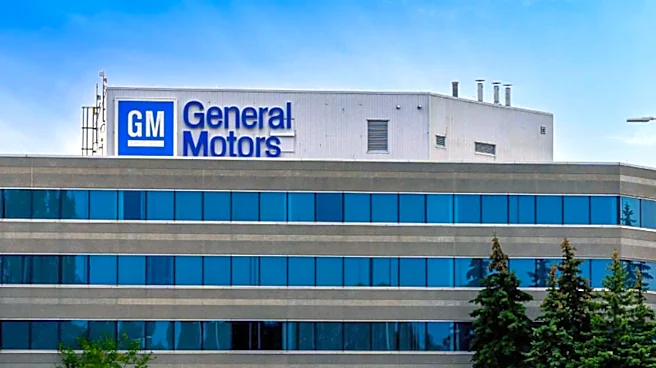
General Motors (GM) CEO Mary Barra has announced the company's intention to introduce hybrid vehicles across multiple segments where GM currently competes. This move will reportedly not require additional investment or engineering. While specific models,
types, or dates were not disclosed by Barra, media speculation suggests a 2027 timeline. GM has also confirmed that its fourth-generation electric vehicles (EVs) will utilize manganese-rich batteries, marking a significant shift from the current high-nickel cells. This change aims to reduce reliance on nickel and cobalt, replacing them with a cheaper and more abundant metal. The new lithium manganese-rich (LMR) prismatic cells are expected to be produced in Spring Hill, Tennessee, starting in 2028.
Why It's Important?
This strategic pivot by GM has significant implications for the U.S. automotive industry and its supply chains. The reintroduction and expansion of hybrid offerings could help GM capture a broader market, especially consumers who are not yet ready for full electric vehicle adoption or require the extended range and flexibility hybrids offer. The shift to manganese-rich batteries for EVs is crucial for reducing manufacturing costs and mitigating supply chain risks associated with nickel and cobalt, which are often sourced from politically unstable regions. By focusing on North American parts for both hybrids and EVs, GM aims to comply with regulations like the United States-Mexico-Canada Agreement (USMCA), which requires 75% North American content for vehicles. This could bolster domestic manufacturing and create jobs within the U.S. automotive sector.
What's Next?
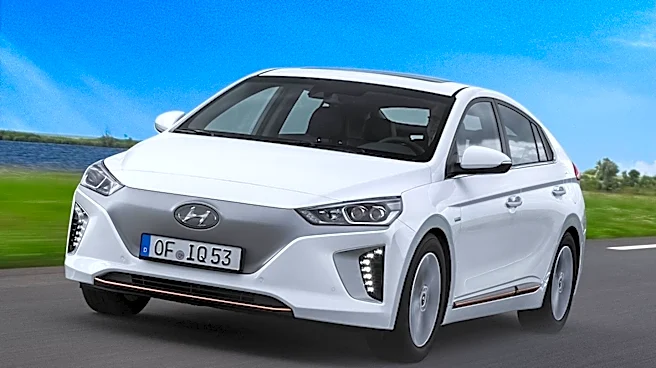
GM is preparing its Lansing Delta Township plant in Michigan for future hybrid production, though specific models and timing remain unconfirmed. According to Reuters, citing anonymous sources, this could include the Chevrolet Traverse, Buick Enclave, and GMC Acadia. The company's fourth-generation EV platform, featuring LMR prismatic cells, is slated for production in Spring Hill, Tennessee, starting in 2028. GM's partnership with Hyundai, announced in August 2025, also indicates potential powertrain collaborations, including hybrids, with some vehicles aimed at the U.S. market from 2028. The success of these initiatives will depend on GM's ability to integrate North American powertrains and components while leveraging insights from its existing Chinese hybrid systems.
Beyond the Headlines
The dual strategy of expanding hybrids and transitioning to manganese-rich EV batteries reflects a broader industry trend towards diversification and resilience in the face of evolving market demands and geopolitical pressures. The emphasis on North American content for both hybrid and EV components highlights a strategic effort to localize supply chains, which could reduce vulnerability to international trade disputes and tariffs. While GM claims to have solved previous issues with LMR batteries, independent test data is yet to be published, which will be crucial for consumer confidence and widespread adoption. This move could also set a precedent for other U.S. automakers to explore alternative battery chemistries and hybrid technologies, potentially accelerating the transition to a more sustainable and domestically sourced automotive future.