



What's Happening?
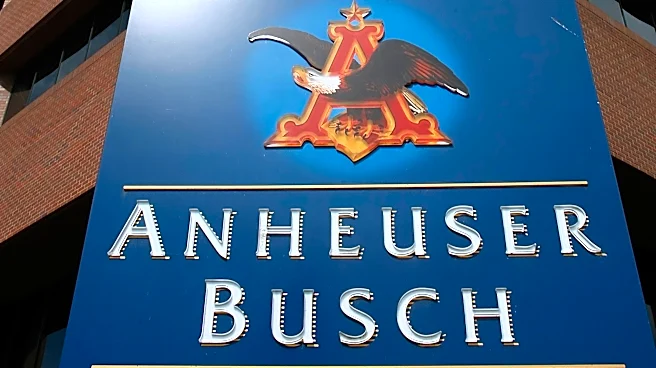
Anheuser-Busch InBev (BUD), a major player in the consumer staples sector, has received a downgrade from an analyst, shifting its rating from 'Overweight' to 'Neutral'. This adjustment comes with a new price target of $82.00 per share. The company, known
for its extensive beer and brewing operations, is publicly traded on the NYSE. This analyst action reflects a less favorable outlook on the stock's near-term performance. Historically, Anheuser-Busch InBev's stock has shown varied reactions to news headlines, with a median movement of 1.0% in either direction across 29 past sessions following significant announcements. This particular downgrade is a sell-side analyst's move, indicating a revised assessment of the company's investment potential.
Why It's Important?
This downgrade is significant for investors and the broader market as it signals a potential shift in expert sentiment regarding Anheuser-Busch InBev's financial prospects. A 'Neutral' rating suggests that the analyst believes the stock is likely to perform in line with the market average, rather than outperforming it. This could lead to decreased investor confidence and potentially impact the stock price, affecting shareholders. For the consumer staples industry, such analyst actions can influence sector-wide perceptions and investment flows. Companies like Anheuser-Busch InBev, with their large market capitalization and global presence, often serve as bellwethers for their respective industries, making analyst downgrades noteworthy for market observers.
What's Next?
Following this downgrade, Anheuser-Busch InBev's stock performance will be closely monitored by investors. The new price target of $82.00 will serve as a benchmark for market expectations. The company's future earnings reports and financial statements will be critical in either validating or challenging this revised analyst outlook. Investors will also be looking for any strategic responses from Anheuser-Busch InBev, such as new initiatives or financial guidance, that could counter the analyst's less optimistic view. The stock's reaction in subsequent trading sessions will indicate how the market is absorbing this news, potentially influencing other analysts' ratings and broader investment strategies within the consumer staples sector.
Beyond the Headlines
The analyst downgrade of Anheuser-Busch InBev highlights the dynamic nature of stock market valuations and the influence of expert opinions on investor behavior. While a downgrade doesn't necessarily indicate fundamental problems with the company, it can trigger a re-evaluation of investment theses. This event also underscores the importance of understanding analyst ratings, which provide a snapshot of professional sentiment but should be considered alongside a comprehensive analysis of a company's financials, market position, and future growth prospects. For a company of Anheuser-Busch InBev's stature, such a rating change can also reflect broader trends in consumer preferences or economic conditions affecting the beverage industry, prompting deeper scrutiny into its long-term resilience and adaptability.