









What's Happening?
The Justice Society of America (JSA), formed in 'All-Star Comics #3' on November 22, 1940, is recognized as the first superhero team and a foundational element of the Golden Age of heroism. Beyond establishing the concept of superhero teams, the JSA's
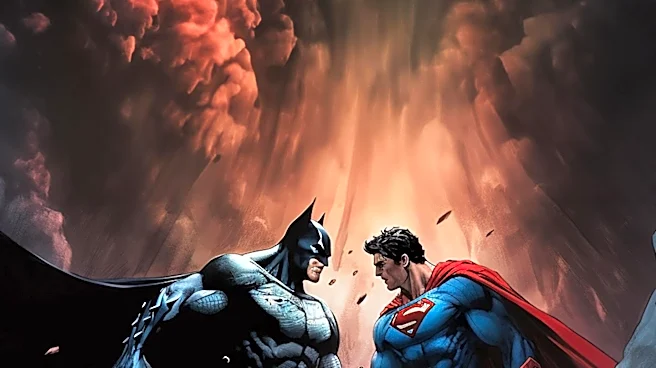
creation marked the first inter-company crossover in comic book history. Its members were drawn from two distinct publishing houses, National Allied Publications (home to Superman, Spectre, Doctor Fate) and All-American Publications (featuring Flash, Green Lantern, Atom, Hawkman, Wonder Woman), which would later merge to form DC Comics. This initial collaboration set a precedent for heroes from different publishers to unite, paving the way for future crossovers between major comic book companies like DC and Marvel, such as 'Superman vs. The Amazing Spider-Man' in 1976.
Why It's Important?
The JSA's pioneering role in inter-company crossovers fundamentally reshaped the landscape of the U.S. comic book industry. By demonstrating that characters from different publishing entities could coexist and collaborate, it laid the groundwork for the expansive, interconnected universes that define modern superhero comics. This innovation not only enriched storytelling possibilities but also fostered a sense of shared mythology among various heroes, influencing how publishers approached character integration and universe-building. The JSA's legacy is evident in the continued popularity of crossovers, which generate significant fan excitement and commercial success, proving that the concept of heroes bridging company-wide chasms remains a powerful draw for audiences and a key driver for the industry.
Beyond the Headlines
The JSA's impact extends beyond mere narrative convenience; it established a cultural expectation for interconnectedness and collaboration within the superhero genre. This early precedent for inter-company cooperation highlights the fluid nature of creative ownership and the potential for shared intellectual property to create richer, more complex fictional worlds. The eventual decline of crossovers in the mid-2000s, attributed to executive decisions, and their subsequent resurgence, underscore the cyclical nature of industry trends and the enduring appeal of seeing beloved characters interact across different universes. The JSA's initial formation serves as a reminder that the boundaries between fictional worlds are often permeable, driven by both creative vision and commercial opportunity, ultimately shaping the evolution of superhero storytelling.