








What's Happening?
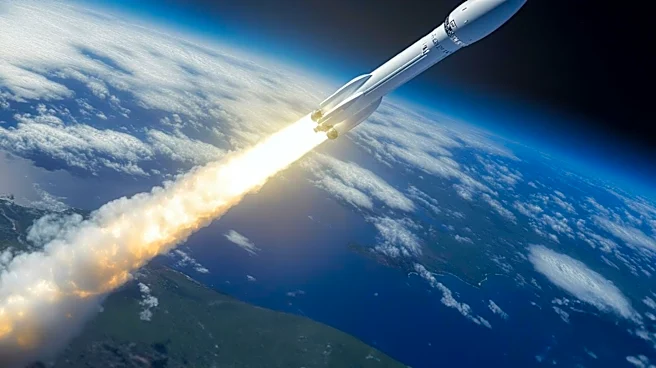
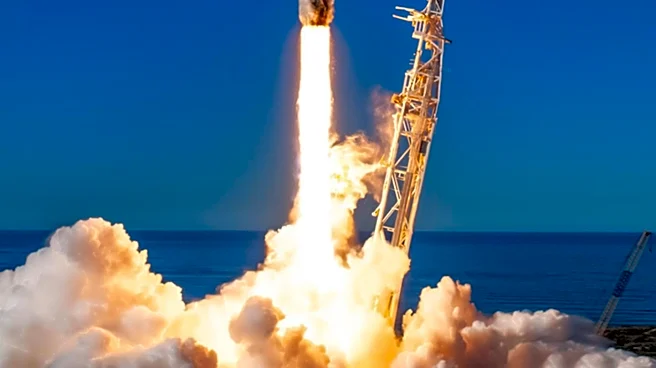
SpaceX successfully launched 24 Starlink satellites from Vandenberg Space Force Base in California using a Falcon 9 rocket. The launch took place on July 1, 2026, and the satellites were deployed into low Earth orbit about an hour later. This mission
is part of SpaceX's ongoing effort to expand its Starlink megaconstellation, which now includes over 10,700 active satellites. The Falcon 9's first stage, Booster 1100, completed its seventh flight and successfully landed on the drone ship 'Of Course I Still Love You' in the Pacific Ocean.
Why It's Important?
The expansion of the Starlink network is significant as it enhances global broadband connectivity, providing internet access to remote and underserved areas. SpaceX's ability to reuse rocket boosters effectively reduces launch costs, making satellite deployment more economical. The growing Starlink constellation also positions SpaceX as a leader in the satellite internet market, competing with other providers like Amazon Leo. This development could lead to increased competition, potentially driving down prices and improving service quality for consumers worldwide.
What's Next?
SpaceX plans to continue launching Starlink satellites to achieve its goal of global internet coverage. The company is also exploring new markets, such as in-flight and direct-to-cell services, which could further expand its customer base. As the constellation grows, SpaceX will need to address regulatory challenges and ensure the sustainability of its operations in low Earth orbit.