








What's Happening?
Paulig, an international food and beverage company, is extending its regenerative agriculture program from wheat to corn through new collaborations across Europe. This initiative aims to support farmers in adopting practices that reduce emissions, improve
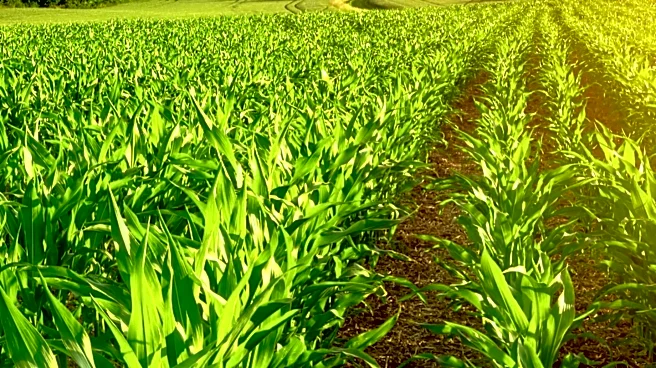
soil health, enhance climate resilience, and optimize water management. Corn is a crucial ingredient for Paulig's large-scale production of tortilla chips, corn tortilla wraps, and toasted corn products. The program involves Paulig suppliers Cornexo (Germany), Maselis (Belgium/France), and Mercoguadiana (Spain), initially covering over 10,000 tonnes of corn flour and kernels annually from up to 50 farmers. Paulig is investing EUR 2-3 million annually through its internal Climate Fund to support such programs, with a goal to cut the carbon footprint per kilogram of corn flour by 25%, potentially reducing emissions by approximately 1,700 tonnes of CO2-equivalents each year.
Why It's Important?
While Paulig is an international company and this initiative is focused in Europe, the expansion of regenerative agriculture practices to corn has significant implications for the U.S. food industry and agricultural sector. The U.S. is a major producer and consumer of corn, and the adoption of regenerative practices globally can influence market standards, consumer demand for sustainably sourced ingredients, and agricultural policy discussions within the U.S. If successful, Paulig's program could serve as a model for U.S. food companies and farmers looking to reduce their environmental footprint and build more resilient supply chains. Increased demand for regeneratively grown corn could create new market opportunities for U.S. farmers who adopt these practices. Furthermore, the focus on reducing greenhouse gas emissions and improving soil health aligns with broader environmental goals that are relevant to U.S. agricultural sustainability efforts.
What's Next?
Paulig's program will involve ongoing support for farmers in adopting regenerative practices, coupled with data collection on environmental outcomes and annual carbon footprint measurements. The success of this European initiative could lead to its expansion to other regions or inspire similar programs by other international food companies, potentially influencing U.S. agricultural practices. The target of a 25% reduction in carbon footprint per kilogram of corn flour, equivalent to about 3% of Paulig's total corn-related greenhouse gas emissions, will be closely monitored. If these targets are met, it could demonstrate the economic and environmental viability of regenerative agriculture for large-scale corn production, encouraging wider adoption. The program also highlights the increasing role of corporate climate funds in driving sustainable agricultural transitions.
Beyond the Headlines
The shift towards regenerative agriculture, exemplified by Paulig's initiative, represents a fundamental change in how food is produced, moving beyond simply sustaining current practices to actively restoring ecological health. This approach addresses critical long-term challenges such as soil degradation, water scarcity, and climate change, which are global concerns with direct relevance to U.S. agriculture. The collaboration between a food company, its suppliers, and farmers underscores the necessity of a value-chain approach to sustainability. This model suggests that true environmental impact requires collective action and shared responsibility across the entire food system. The program also highlights the growing consumer demand for transparent and sustainably sourced products, pushing companies to invest in and communicate their environmental efforts, thereby influencing broader market trends and corporate social responsibility standards.