




What's Happening?
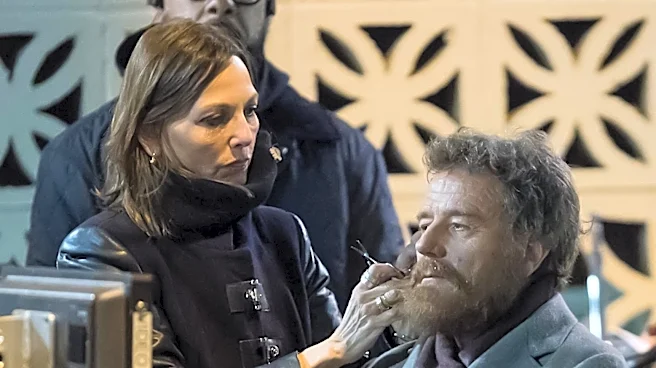
Actor Bryan Cranston has revealed a personal connection to his latest animated film, 'Tangles,' where he voices a character whose wife is diagnosed with Alzheimer's. Cranston shared that his own mother suffered from the disease, which provided him with a deep
understanding of the role. He discussed this at a screening of the film, noting that many cast members, including Julia Louis-Dreyfus, who voices his character's wife, also have close experiences with Alzheimer's. Cranston explained that his mother's diagnosis, which occurred after a period of strained relationship, ultimately simplified their interactions, focusing on simple acts of love and care. He emphasized that the disease's progression is unpredictable and can significantly impact families. His mother, Peggy Sell, passed away in 2004. Despite the serious subject matter, Cranston described the filmmaking process as not depressing, highlighting the film's exploration of a full spectrum of human emotions, including sadness, despair, happiness, and family bonding.
Why It's Important?
This revelation from Bryan Cranston brings a significant layer of authenticity and emotional depth to 'Tangles,' potentially enhancing its impact on audiences. By sharing his personal experience with Alzheimer's, Cranston helps to destigmatize the disease and foster greater empathy and understanding among viewers. His perspective underscores the film's potential to serve as more than just entertainment, offering a relatable narrative for families affected by Alzheimer's. The involvement of actors with personal connections to the subject matter can lead to more nuanced and powerful performances, which in turn can elevate the film's message about the challenges and complexities of living with and caring for someone with the disease. This personal insight from a prominent actor can also draw more attention to Alzheimer's awareness and research efforts, encouraging public discourse and support for those impacted.
What's Next?
The film 'Tangles,' featuring Bryan Cranston and Julia Louis-Dreyfus, is expected to continue its run, potentially gaining more traction as Cranston's personal connection to the subject matter becomes more widely known. This personal narrative may lead to increased media coverage and discussions surrounding Alzheimer's disease, potentially prompting advocacy groups to utilize the film as a tool for awareness campaigns. Audiences may approach the film with a deeper appreciation for its emotional authenticity, leading to more profound discussions about the disease's impact on families. The film's success could also encourage other filmmakers to tackle sensitive health topics with similar personal insights, fostering a trend of more emotionally resonant and impactful storytelling in Hollywood. Furthermore, the film's portrayal of the disease could influence public perception and encourage support for caregivers and patients.
Beyond the Headlines
Bryan Cranston's candid sharing of his mother's struggle with Alzheimer's transcends typical celebrity promotion, offering a powerful commentary on the human experience of illness and family dynamics. His account highlights the often-overlooked aspect of reconciliation and simplified love that can emerge even in the face of devastating diseases. This narrative challenges the common perception of Alzheimer's as solely a story of loss, instead presenting it as a complex journey that can also bring unexpected moments of connection and peace. Ethically, his openness contributes to a broader societal conversation about vulnerability and the importance of sharing personal struggles, potentially inspiring others to speak out and seek support. Culturally, it reinforces the role of art, particularly film, as a medium for processing difficult realities and fostering collective empathy, moving beyond mere entertainment to serve as a catalyst for social understanding and emotional healing.