



What's Happening?
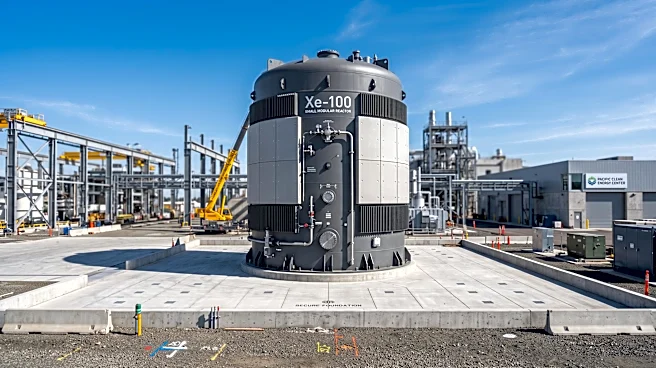
The U.S. Nuclear Regulatory Commission (NRC) has granted a construction permit for four Xe-100 small modular reactor (SMR) units at Dow's Seadrift site in Texas. This marks the first construction permit for a high-temperature gas-cooled reactor issued
in the U.S. in nearly 60 years and the first for an advanced nuclear reactor at an industrial site. X-energy, the developer, claims its Xe-100 reactor design, which uses helium gas over uranium-containing fuel pellets, is safer than many existing reactors. Each Xe-100 unit is designed to generate 80 megawatts of electricity and 200 megawatts of heat. The project, under the U.S. Department of Energy’s Advanced Reactor Demonstration Program, aims for first delivery in the early 2030s. The NRC completed its review within an 18-month timeline, demonstrating its ability to conduct rigorous safety reviews efficiently for advanced nuclear technology.
Why It's Important?
This approval is a significant milestone for the U.S. nuclear industry, which views SMRs as crucial for future power generation. SMRs offer several advantages over traditional large-scale nuclear plants, including easier deployment, scalable capacity, and potentially more flexible power generation. They provide 24/7 carbon-free electricity, unlike intermittent renewable sources, and are not subject to volatile fuel markets like natural gas. The ability to co-locate SMRs with heavy energy users, such as data centers and industrial facilities, is particularly appealing given the rapidly increasing electricity demand from AI and other digital services. The project at Dow's site will provide both electricity and high-temperature steam, replacing aging energy assets and supporting industrial operations for 60 years. However, the Union of Concerned Scientists has raised concerns about the safety claims and the speed of the permit approval, suggesting critical safety questions might have been deferred.
What's Next?
Following this construction permit approval, X-energy and Dow will continue to advance the project towards construction readiness. This includes finalizing and standardizing the Xe-100 design, developing the supply chain for long-lead components, and preparing an operating license application for submission to the NRC. Dow is expected to make a preliminary investment decision in 2027, with full-scale nuclear construction commencing after a final investment decision. X-energy anticipates its reactors at the Dow site will be operational by the early 2030s. The success of this project could pave the way for broader adoption of SMRs in the U.S. and potentially influence regulatory processes for future advanced nuclear technologies. The company's shares, which are currently trading at less than half their initial offering price, may see a boost if the project progresses smoothly and addresses investor hesitancy regarding the high costs and long timelines associated with nuclear plant construction.
Beyond the Headlines
The approval of X-energy's SMRs highlights a broader shift in energy strategy, driven by the increasing demand for reliable, carbon-free power, especially from energy-intensive sectors like data centers and AI factories. While SMRs promise to be more affordable and quicker to build due to their modular, factory-built design, their actual cost and construction timelines in practice are yet to be fully proven. The debate between proponents, who emphasize safety and efficiency, and critics, who question the thoroughness of regulatory reviews and potential safety risks, underscores the ongoing challenges in public perception and regulatory oversight for nuclear power. The project's success could set a precedent for integrating advanced nuclear technology into industrial operations, potentially transforming the energy landscape and reducing reliance on fossil fuels for industrial processes. However, addressing concerns about safety, waste management, and the long-term economic viability of SMRs will be crucial for their widespread acceptance and deployment.