



What's Happening?
Arthur Mensch, co-founder and CEO of French AI company Mistral, has highlighted Europe's significant challenge in the global artificial intelligence race. Speaking at Bits&Pretzels in Munich, Mensch argued that Europe risks becoming strategically dependent
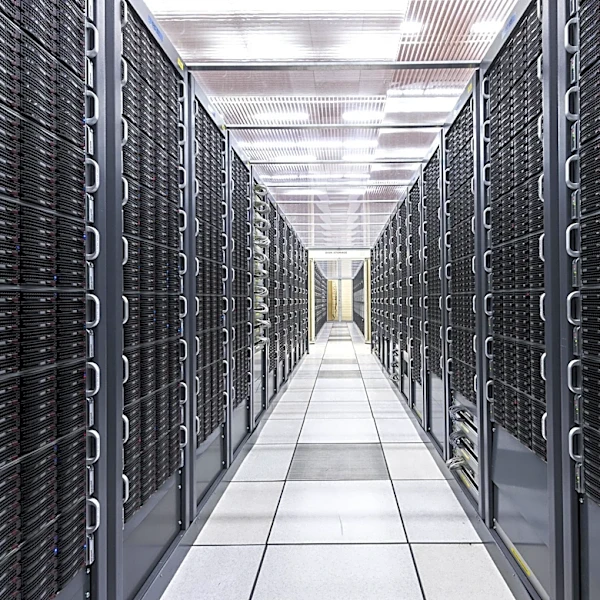
on other countries that control AI technology. He emphasized that the continent has a limited timeframe to develop the necessary infrastructure, models, and technical capabilities to maintain technological independence. Mensch believes that if Europe cannot produce and improve its own AI models, it will be entirely reliant on external entities. This dependency, he stated, poses a greater strategic risk than the potential for AI systems to become uncontrollable. He identified two interconnected challenges: keeping pace with the quality of AI models and developing sufficient infrastructure to run them, noting that much of Europe's energy capacity is being utilized by American companies building large data centers.
Why It's Important?
This warning from a prominent AI industry leader underscores a critical geopolitical and economic concern for Europe, with potential implications for global technological balance. A strategic dependency on foreign AI models and infrastructure could lead to a significant outflow of economic value from Europe, as a growing share of AI-generated wealth would benefit external entities. More critically, it could jeopardize Europe's access to essential AI capabilities if geopolitical relations deteriorate, impacting sectors like defense, cybersecurity, and industrial research. Mensch's comparison of AI models to oil highlights their status as a strategic commodity, emphasizing the need for Europe to develop its own production capabilities even while importing models. This situation could influence trade policies, investment in domestic AI research and development, and international collaborations, as Europe seeks to secure its technological sovereignty and competitiveness.
What's Next?
Mensch indicated that the next 12 to 24 months will be a crucial period for Europe to strengthen its position in AI. This will likely involve accelerated efforts to build data centers and train AI models at a larger scale. Mistral's strategy, focusing on an ecosystem of open models, enterprise infrastructure, and customized AI deployments, suggests a path for European companies to differentiate themselves from American competitors. The company aims to integrate AI deeper into European industry, moving beyond individual productivity tools to transform complex enterprise operations in sectors like engineering, manufacturing, and supply chains. This approach includes offering on-premises deployments to address strict data requirements in industries such as manufacturing and financial services, and investing in specialized engineering expertise, as evidenced by Mistral's new Munich office focusing on industrial engineering and physics backgrounds.
Beyond the Headlines
The discussion extends beyond mere technological competition to fundamental questions of sovereignty and intellectual autonomy. Mensch's concern about Europe's energy capacity being captured by foreign companies for data centers highlights a deeper issue of resource allocation and control in the digital age. His argument that humans must always be able to understand AI decisions, particularly in critical business environments, touches upon the ethical and philosophical dimensions of AI integration. Furthermore, his unexpected warning against over-reliance on AI for writing and documentation, viewing writing as a form of thinking, suggests a broader societal implication: the potential for intellectual passivity if individuals disengage from fundamental cognitive processes. This perspective calls for a careful design of the human-AI relationship, ensuring that technological advancement does not diminish human capacity for critical thought and understanding.