










What's Happening?
Economists Gerry Tsoukalas and Brett Falk have raised concerns about the potential for artificial intelligence (AI) to trigger a wave of layoffs that could ultimately harm businesses. Their research, published by The Wharton School, suggests that as companies
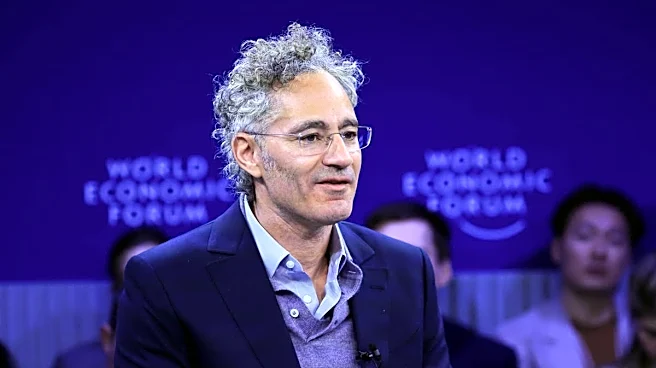
increasingly automate, they may inadvertently reduce consumer spending, which is crucial for their survival. The dilemma arises because while a single company might recognize the risk of reducing its workforce, competitive pressures drive all companies to adopt AI to avoid falling behind. This creates a 'dominating strategy' where automation becomes the default choice, despite its potential to erode the consumer base. The World Economic Forum has echoed these concerns, noting that traditional reskilling programs are struggling to keep pace with AI-driven changes, leaving many workers at risk of redundancy.
Why It's Important?
The implications of widespread AI adoption are significant for the U.S. economy and labor market. If companies continue to automate without considering the broader economic impact, consumer spending could decline, affecting industries reliant on consumer demand. This scenario could lead to a vicious cycle where reduced spending further pressures companies to cut costs, including labor. The potential for mass layoffs also raises social and economic concerns, as displaced workers may struggle to find new employment without adequate reskilling opportunities. Policymakers and business leaders must consider strategies to balance technological advancement with workforce sustainability, such as implementing taxes on automation or providing subsidies to companies that retain employees.
What's Next?
Future discussions may focus on developing policies to mitigate the negative impacts of AI on employment. This could include exploring new economic models that prioritize livelihoods over traditional job structures. Additionally, there may be increased advocacy for government intervention to regulate the pace of automation and support reskilling initiatives. Companies might also face pressure to adopt more socially responsible practices, balancing technological adoption with workforce considerations.