







What's Happening?
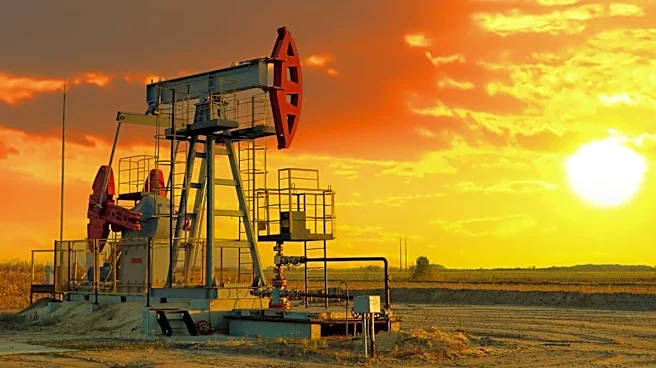
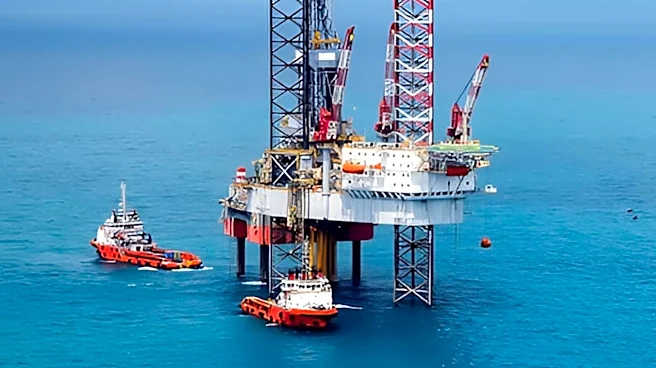
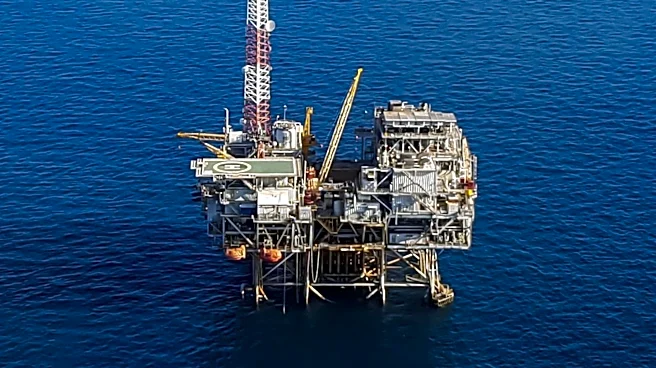
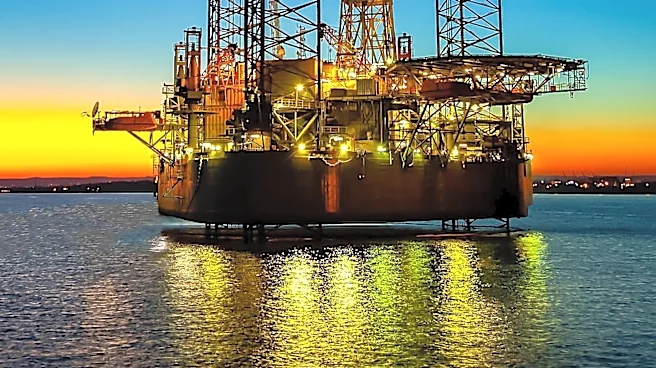
The number of active oil and gas drilling rigs in the United States has increased, with the total rig count reaching 588, according to Baker Hughes. This marks a rise of 44 rigs compared to the same period last year. The number of active oil rigs specifically
rose by 7, bringing the total to 452. This increase comes as Brent crude oil prices have climbed by 4%, trading at $87.65 per barrel. The U.S. Energy Information Administration (EIA) reported a slight increase in weekly U.S. crude oil production, averaging 13.861 million barrels per day. The Permian Basin saw an increase in active rigs, while the Eagle Ford count remained stable.
Why It's Important?
The uptick in U.S. oil drilling activity reflects a response to rising oil prices, driven by global market dynamics and geopolitical tensions. As oil prices increase, U.S. producers are incentivized to ramp up production to capitalize on higher revenues. This trend could contribute to stabilizing global oil supply and potentially moderating price volatility. The increase in drilling activity also signals confidence in the U.S. energy sector's ability to adapt to market conditions and maintain its position as a leading oil producer. However, the expansion of drilling operations may raise environmental concerns and debates over energy policy.
What's Next?
As U.S. oil drilling activity continues to rise, industry stakeholders will monitor market trends and geopolitical developments that could impact oil prices. The potential for further increases in production may influence OPEC's decisions on output levels and global supply strategies. Additionally, the U.S. energy sector may face regulatory and environmental challenges as it seeks to balance production growth with sustainability goals. The ongoing evolution of the energy market will require strategic planning and collaboration among industry players to navigate complex economic and environmental landscapes.