



What's Happening?
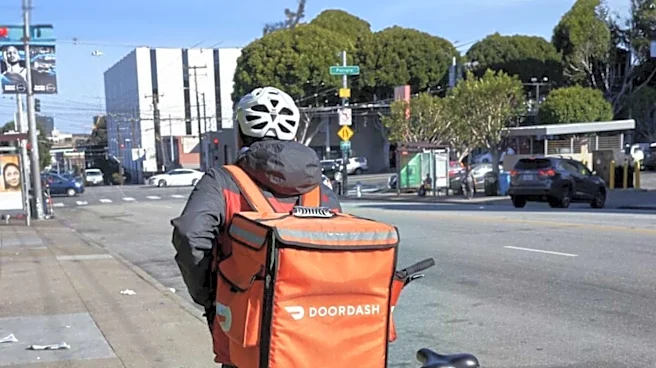
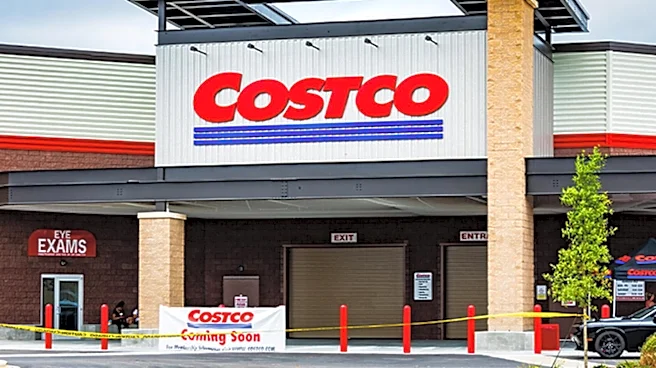
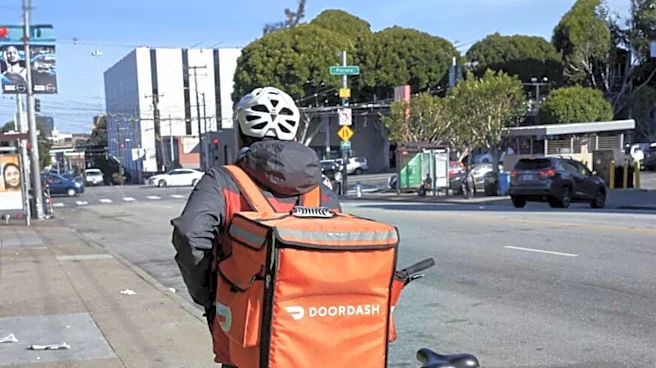
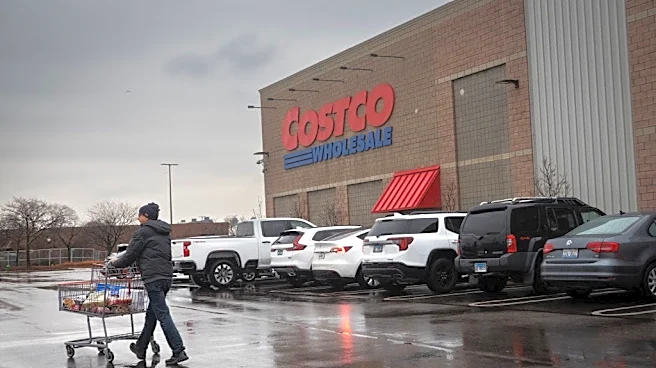
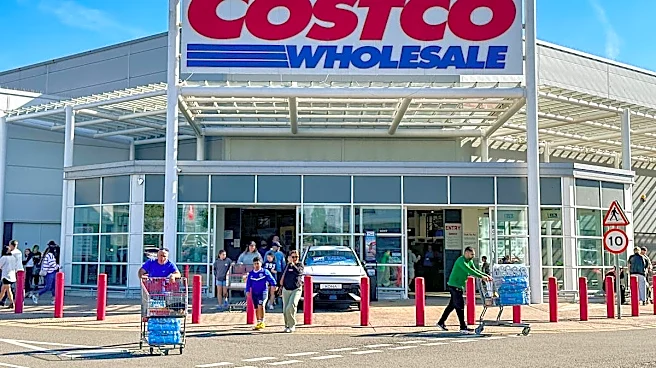
Costco has announced a new partnership to offer grocery delivery services from all its U.S. warehouse clubs through DoorDash and Uber Eats. This collaboration provides DoorDash with nationwide access to Costco, a major retailer previously unavailable
on its U.S. marketplace. Uber Eats is also expanding its grocery delivery reach through this tie-up. The move is part of a broader trend in retail delivery, following similar partnerships between DoorDash, Uber Eats, and Kroger. This expansion aims to enhance convenience for Costco members and allows the delivery platforms to increase their presence in the everyday essentials market, which offers higher order frequency and potentially more attractive basket economics compared to sporadic takeout orders.
Why It's Important?
This partnership is significant for several reasons. For Costco, it extends its digital reach and enhances convenience, allowing it to compete more effectively in a market where warehouse clubs are increasingly focusing on both price and accessibility. For DoorDash and Uber Eats, integrating Costco's offerings provides access to a vast base of 81 million members worldwide, offering a ready-made segment of high-value shoppers. This move helps these delivery companies diversify beyond restaurant meals, which are more susceptible to discretionary spending fluctuations, into groceries and household essentials that generate more consistent orders and higher customer retention. The timing also coincides with resilient U.S. labor market data, suggesting consumers have stable income to utilize such services, reinforcing the viability of this expansion.
What's Next?
The immediate next step will be the full integration and rollout of Costco's inventory onto the DoorDash and Uber Eats platforms across all U.S. locations. This will involve operational adjustments for both Costco and the delivery services to manage order fulfillment, inventory synchronization, and delivery logistics efficiently. The success of this partnership will likely be measured by customer adoption rates, order frequency, and the ability of DoorDash and Uber Eats to maintain profitability in the grocery delivery sector. Competitors in both the retail and delivery spaces will be closely observing the impact of this collaboration, potentially leading to further consolidation or new partnerships in the rapidly evolving grocery delivery market. Investors will also be watching to see if this expansion into higher-order-value transactions can improve the financial performance and stock volatility of DoorDash and Uber Eats.
Beyond the Headlines
This strategic alliance underscores a fundamental shift in consumer behavior towards convenience and on-demand services, even for bulk purchases traditionally associated with in-person warehouse shopping. It highlights the increasing importance of last-mile delivery capabilities for retailers, pushing them to either build their own networks or partner with established delivery platforms. The partnership also reflects the ongoing battle among delivery companies to capture a larger share of U.S. consumer spending, moving beyond niche services to everyday essentials. This trend could lead to a redefinition of the grocery shopping experience, with a greater emphasis on digital platforms and rapid delivery, potentially impacting the long-term viability of traditional brick-and-mortar retail models that do not adapt to these changes. The resilience of the labor market, as noted in the source, provides a crucial backdrop, suggesting that consumers have the financial capacity to sustain these convenience-driven services.