





What's Happening?
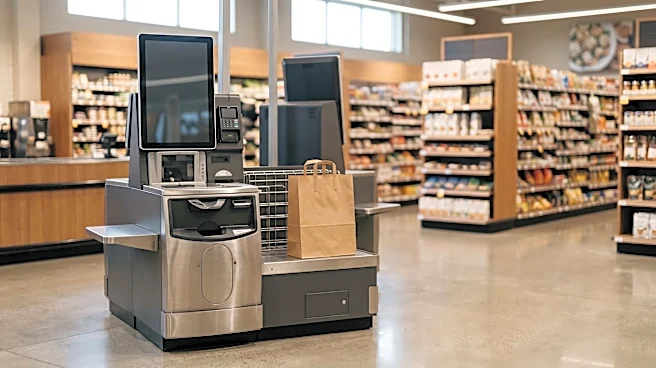
Major grocery chains, including Kroger, Walmart, and Publix, are facing increasing scrutiny over their practice of asking customers for charitable donations at self-checkout registers. A study reported by The Wall Street Journal suggests that these donation prompts
can make shoppers feel uncomfortable and self-conscious, potentially leading to a negative perception of the retailer. Ying Zou, a Ph.D. candidate at the University of Adelaide Business School and co-author of the study, indicated that customers often object to the intrusion of these requests during the payment process. The research found that shoppers who felt more pressured by donation requests rated the retailer less favorably and were less likely to express a desire to return to the store. Additionally, these customers were more skeptical about the retailer's motives and whether the donations genuinely reached the intended charities.
Why It's Important?
This issue is significant for the U.S. retail industry as it highlights a potential disconnect between corporate social responsibility initiatives and customer experience. While charitable giving is generally viewed positively, the method of soliciting donations at the point of sale, particularly at self-checkout, appears to be backfiring for some major retailers. A negative customer experience can impact brand loyalty, sales, and overall market share in a highly competitive sector. Retailers risk alienating a segment of their customer base if these practices are perceived as intrusive or manipulative. The study's findings suggest that the perceived pressure to donate can lead to skepticism about the retailer's integrity, which could have long-term reputational consequences. This situation underscores the importance of understanding consumer psychology and optimizing the checkout process to maintain customer satisfaction.
What's Next?
Retailers like Kroger may need to re-evaluate their strategies for charitable solicitations at checkout. The study suggests that providing information about the charity before customers reach the checkout, through posters, displays, or flyers, could allow shoppers to make informed decisions without feeling pressured. This approach could mitigate the negative impact on customer perception and potentially increase genuine donations. Companies might also explore alternative methods of fundraising that are less intrusive during the transaction process. The findings could prompt a broader discussion within the retail industry about ethical fundraising practices and customer-centric approaches to corporate social responsibility. Retailers will likely monitor customer feedback and sales data to determine the most effective and least disruptive ways to support charitable causes while maintaining a positive shopping experience.
Beyond the Headlines
The controversy surrounding self-checkout donation requests touches upon deeper ethical and psychological dimensions of consumer behavior. The 'ask' at the point of sale can create a social pressure dynamic, where customers might feel compelled to donate to avoid appearing uncharitable, even if they are not genuinely inclined to do so. This can lead to feelings of resentment and distrust towards the retailer. Furthermore, the rise of self-checkout technology, intended to streamline the shopping experience, is inadvertently creating new points of friction through these prompts. This situation highlights the challenge for businesses to balance their philanthropic goals with the need to maintain a seamless and positive customer journey. It also raises questions about the transparency of charitable partnerships and how retailers communicate their commitment to social causes without compromising customer trust.