






What's Happening?
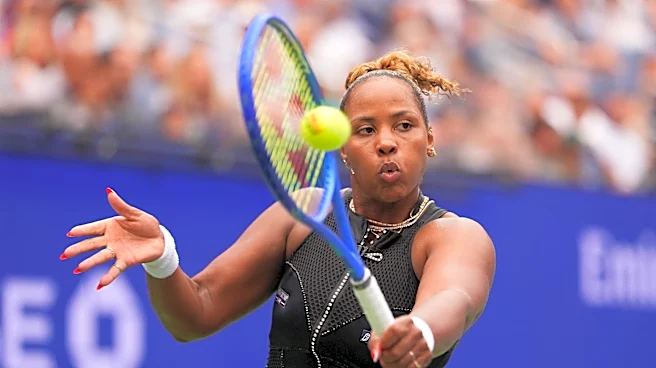
American tennis player Madison Keys has publicly addressed and dismissed persistent online speculation regarding a possible pregnancy after her recent exit from the US Open. Keys, who suffered a dramatic third-round loss to Zheng Qinwen, expressed frustration
over the invasive comments. During a segment on 'The Player's Box' podcast, she clarified that she is not pregnant and emphasized that even if she were, it would be a personal matter and 'no one's business.' The speculation arose after Keys made emotional comments in a post-match press conference, where she spoke about struggling with her form and mindset, stating that 'tennis just feels really hard right now.' She admitted to feeling 'scared' and unable to swing freely during her match against Zheng Qinwen, where she lost after holding a significant lead in the third set. Keys is married to former ATP player Bjorn Fratangelo, who also serves as her coach.
Why It's Important?
This incident highlights the increasing scrutiny and public pressure faced by athletes, particularly female athletes, regarding their personal lives and physical well-being. The immediate leap from an athlete's emotional vulnerability to speculation about pregnancy underscores a broader societal issue where women's bodies and life choices are often subjected to public commentary and judgment. For Madison Keys, a prominent American tennis player, such invasive questions can be a significant distraction from her professional career and mental health. It also raises concerns about the boundaries between public interest and private life, especially in the age of social media where direct access to public figures can blur these lines. The situation could influence how athletes choose to express themselves publicly, potentially leading to more guarded responses to protect their privacy, which might, in turn, affect fan engagement and the perceived authenticity of athletes.
What's Next?
Following her clear statement, Madison Keys is expected to shift her focus back to her professional tennis career. She is scheduled to compete in the WTA 1000 China Open in Beijing, which begins on September 30. Her participation in this upcoming tournament will be an opportunity for her to regain form and confidence after a challenging US Open. The public and media will likely observe her performance closely, with her recent comments potentially influencing how her on-court demeanor and results are interpreted. It remains to be seen if her strong message will deter future invasive personal questions, or if athletes will continue to face similar challenges in managing public perception and privacy. The incident may also prompt broader discussions within sports media and fan communities about appropriate conduct and respect for athletes' personal lives.
Beyond the Headlines
Beyond the immediate news, this situation touches upon the ethical implications of public discourse surrounding female athletes. The assumption of pregnancy based on an athlete's emotional state or perceived physical changes reflects a persistent gender bias, where women's professional identities are often intertwined with their reproductive roles. This can create an environment where female athletes feel compelled to constantly justify their physical condition or personal choices, diverting attention from their athletic achievements. The incident also underscores the power of online speculation and the challenges public figures face in controlling their narratives in the digital age. It prompts a re-evaluation of the responsibilities of both media and the public in respecting the privacy and autonomy of individuals, particularly those in the public eye, and fostering a more supportive and less intrusive environment for professional athletes.