
What's Happening?
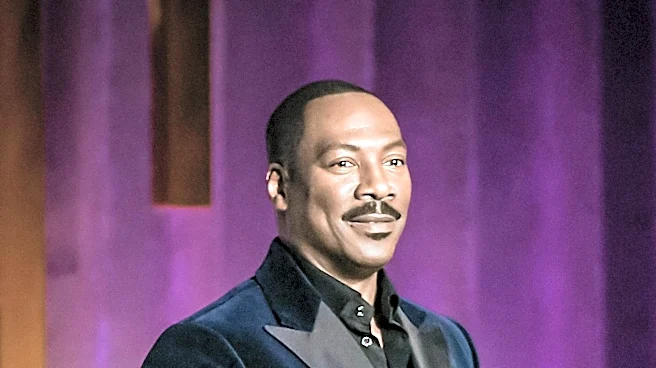
Eddie Murphy's 1988 film 'Coming to America' is being highlighted as a beloved comfort movie, particularly within Black households. The film, starring Murphy as Prince Akeem of the fictional African nation
Zamunda, follows his journey to Queens, New York, to find a bride who will love him for himself, not his royal status. Prince Akeem, accompanied by his sidekick Semmi, works at a fast-food restaurant to pursue Lisa, the daughter of the owner, who is already engaged. The narrative explores themes of cultural clash, identity, and love, culminating in a happy ending. The movie features a notable cast including Arsenio Hall, James Earl Jones, Madge Sinclair, Garcelle Beauvais, and John Amos, with early appearances by Samuel L. Jackson and Cuba Gooding Jr. Its portrayal of diverse Black cultures and communities within the diaspora has resonated deeply with audiences.
Why It's Important?
The enduring popularity of 'Coming to America' underscores its significant cultural impact, particularly as a touchstone for many Black families. The film's ability to blend romantic comedy with cultural commentary, while showcasing a diverse cast, allowed many viewers to see themselves reflected on screen in a way that was uncommon at the time. Its themes of self-determination, cross-cultural love, and the search for genuine connection continue to resonate. The movie's influence extends beyond its initial release, inspiring artists in music and film, and solidifying its status as a cult classic. For many, it represents a nostalgic link to childhood and family, highlighting the power of film to create shared experiences and cultural identity.
Beyond the Headlines
Beyond its entertainment value, 'Coming to America' offers a nuanced look at the complexities of cultural assimilation and the pursuit of love across different social strata. The film subtly critiques societal expectations and class distinctions through Prince Akeem's journey, as he navigates the challenges of a new environment while concealing his true identity. The movie's depiction of New York City, with its vibrant yet gritty realism, contrasts with the opulent world of Zamunda, emphasizing the cultural differences and the prince's genuine desire for an authentic connection. Its lasting appeal also speaks to the universal desire for love and acceptance, regardless of background, making it more than just a comedy but a story with significant heart and social commentary.