







What's Happening?
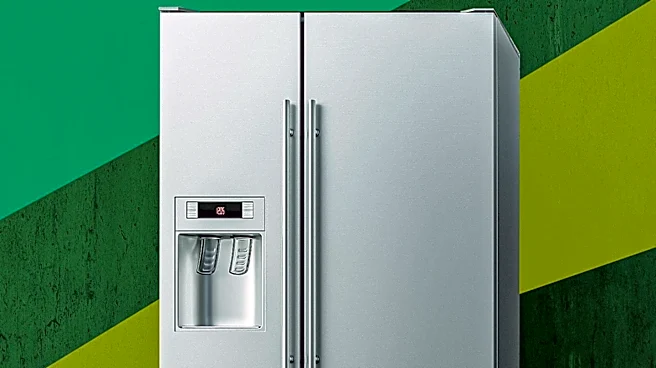
Side-by-side refrigerators, while offering certain advantages like external ice and water dispensers and a narrower profile, come with several notable disadvantages. Their vertical design results in narrow compartments, making it difficult to store wide
items such as large pizzas or serving platters. This design also limits the ability to place all fresh items at eye level, potentially leading to forgotten produce. Installation requires ample space for both doors to open freely, which can be problematic in kitchens not designed for this configuration. Cold distribution can be uneven, particularly in older or cheaper models, with colder air concentrating at the bottom. Furthermore, the common ice and water dispensers, while convenient, are prone to mechanical issues and require frequent cleaning to prevent mold and ensure sanitation, as confirmed by Consumer Reports and Yale Appliance.
Why It's Important?
The challenges associated with side-by-side refrigerators have significant implications for U.S. households and the appliance industry. For consumers, these issues can lead to frustration with kitchen organization, food waste due to poor visibility, and unexpected maintenance costs. The design limitations impact daily functionality, especially for families or individuals who frequently store large or oddly shaped items. For manufacturers, these drawbacks highlight the need for continuous innovation in refrigerator design, focusing on maximizing usable space, improving cold distribution efficiency, and enhancing the reliability and ease of maintenance of features like ice and water dispensers. The insights from Consumer Reports underscore the importance of informed purchasing decisions, as the long-term satisfaction with a major appliance can be heavily influenced by these practical considerations.
What's Next?
Consumers considering a side-by-side refrigerator will need to carefully evaluate their kitchen layout and storage needs, potentially opting for models with wider dimensions or alternative configurations like French door or top/bottom freezer styles. Manufacturers may respond by developing side-by-side models with more flexible interior layouts, advanced cooling systems to ensure even temperature distribution, and more robust, easier-to-clean ice and water dispenser mechanisms. The market could also see an increase in modular or customizable refrigeration solutions that allow consumers to tailor their appliances to specific storage requirements. Retailers will likely emphasize these improved features in their marketing to address common consumer pain points, guiding buyers towards models that offer better functionality and reduced maintenance concerns.
Beyond the Headlines
The discussion around side-by-side refrigerators touches upon broader themes of consumer expectations, product design, and sustainability. The desire for convenience (like external dispensers) often comes with trade-offs in other areas (like maintenance and space utility). This highlights a constant tension in product development between adding features and ensuring core functionality and durability. From a sustainability perspective, issues like uneven cooling and potential food waste due to poor organization underscore the environmental impact of appliance design. As consumers become more environmentally conscious, there may be a growing demand for refrigerators that not only perform well but also contribute to reduced energy consumption and food spoilage, pushing manufacturers to innovate beyond traditional design paradigms.