






What's Happening?
Silver Bull Resources, Inc. (Silver Bull) has announced a setback in its efforts to regain clear legal ownership of the Sierra Mojada silver-zinc project in Coahuila, Mexico. An international arbitration claim filed by the company against Mexico, seeking
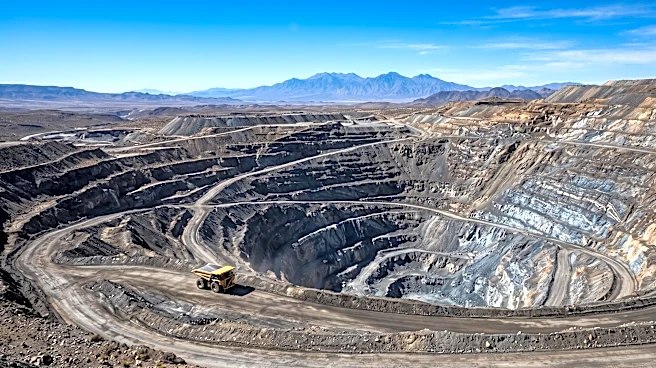
US$374.9 million in damages, was dismissed on jurisdictional and time-limitation grounds. Concurrently, a local third party pursued proceedings in Mexican courts, resulting in an adverse ruling against Silver Bull and a lien over the project's mineral licenses. Despite this, Silver Bull remains the registered owner of the licenses and is actively pursuing legal remedies to protect its rights and shareholder interests. The company emphasizes the substantial mineral resource of Sierra Mojada, which was valued at over US$374.9 million two years ago and is now considered significantly higher due to rising silver and zinc prices. Silver Bull has invested more than US$80 million in exploration costs, defining a large silver-zinc deposit with high-grade zones and further exploration potential.
Why It's Important?
This development is significant for Silver Bull Resources and its shareholders, as the Sierra Mojada project represents the company's sole asset. The dismissal of the arbitration claim and the imposition of a lien on the mineral licenses create considerable uncertainty regarding the project's future and the company's ability to realize its value. For the broader mining industry, this case highlights the complex legal and political risks associated with international mining investments, particularly in regions with evolving regulatory landscapes. The substantial investment already made by Silver Bull underscores the potential financial losses that can occur when legal challenges arise. The outcome could influence how other companies assess and mitigate risks in similar international ventures, potentially leading to more stringent due diligence processes and legal protections. The continued commitment of Silver Bull to the project, despite these challenges, also reflects the perceived long-term value of the silver and zinc resources, which are critical industrial metals.
What's Next?
Silver Bull's immediate priority is to restore clear title and access to the Sierra Mojada project. The company will continue to pursue legal remedies to protect its rights and shareholder interests, acknowledging that these efforts involve inherent risks and may not succeed. If successful in resolving these legal matters, Silver Bull's objective is to advance Sierra Mojada towards feasibility and potential development, possibly in collaboration with a strong industry partner. The company will need to evaluate a path forward that addresses the legal, technical, and financial requirements. The outcome of these ongoing legal battles will determine the timeline and viability of future exploration and development activities at Sierra Mojada. Investors and stakeholders will be closely watching for updates on the company's legal progress and any potential partnerships that could help unlock the project's value.
Beyond the Headlines
The situation with Silver Bull Resources and the Sierra Mojada project extends beyond a simple legal dispute; it touches upon the broader implications of resource nationalism and the protection of foreign investments in developing economies. The dismissal of the arbitration claim on jurisdictional and time-limitation grounds, rather than on the merits of the case, raises questions about the effectiveness of international arbitration mechanisms in safeguarding investor rights. This case could serve as a precedent, influencing how other nations approach foreign investment disputes and potentially leading to increased scrutiny of investment treaties. Furthermore, the involvement of a local third party in Mexican courts, leading to an adverse ruling and a lien, highlights the complexities of navigating local legal systems and the potential for conflicts between international and domestic legal frameworks. The long-term implications could include a re-evaluation of investment strategies by mining companies in regions perceived as high-risk, potentially impacting global supply chains for critical minerals like silver and zinc.