




What's Happening?
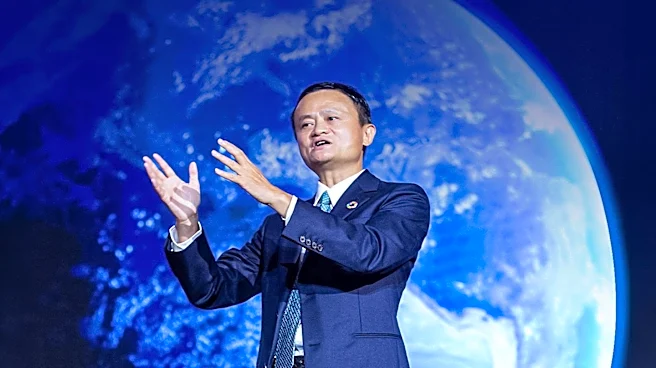
Alibaba founder Jack Ma Yun recently visited T-Head Semiconductor, Alibaba's chip unit, and posed for photos with staff. This visit comes as T-Head prepares for its initial public offering (IPO) in Hong Kong. Alibaba had previously submitted a confidential
listing application to the Hong Kong Stock Exchange on September 11 to spin off T-Head for a separate H-share listing. The unit is reportedly aiming to raise between US$2 billion and US$3 billion (HK$15.6 billion to HK$23.4 billion) through this IPO. T-Head, founded on September 19, 2018, was named by Ma, with its Chinese name "Ping Tou Ge" referring to the honey badger, known for its fearlessness. Alibaba frequently names its products and subsidiaries after animals, leading Chinese netizens to refer to its ecosystem as the "Alibaba Zoo."
Why It's Important?
The impending IPO of T-Head Semiconductor is a significant development for Alibaba and the broader technology sector. A successful listing could provide substantial capital for T-Head, enabling further investment in research and development within the crucial semiconductor industry. This move highlights Alibaba's strategic focus on strengthening its capabilities in core technologies, particularly in chip design and manufacturing, which are vital for its cloud computing and artificial intelligence initiatives. The substantial fundraising target indicates the company's ambition to become a major player in the global chip market. For investors, T-Head's IPO offers an opportunity to invest in a rapidly growing segment of the tech industry, backed by one of the world's largest e-commerce and technology conglomerates. The success of this IPO could also influence other large tech companies considering similar spin-offs to unlock value from their specialized units.
What's Next?
Following the confidential listing application submitted in September, T-Head will proceed with the necessary regulatory approvals and market preparations for its Hong Kong IPO. The company will likely engage in investor roadshows and marketing efforts to generate interest and secure commitments for its shares. The timing of the IPO will depend on market conditions and regulatory clearances. A successful listing could pave the way for T-Head to operate more independently, potentially fostering greater innovation and agility in its chip development efforts. The capital raised will be crucial for T-Head to expand its operations, invest in advanced technologies, and compete with established players in the semiconductor industry. The performance of T-Head's stock post-IPO will be closely watched as an indicator of investor confidence in Alibaba's strategic spin-off model and the future of the semiconductor market.
Beyond the Headlines
The spin-off and IPO of T-Head reflect a broader trend among large technology conglomerates to unbundle their diverse business units to unlock shareholder value and enhance operational focus. By separating T-Head, Alibaba aims to highlight the intrinsic value of its semiconductor business, which might otherwise be overshadowed within the larger Alibaba ecosystem. This strategy could also mitigate regulatory scrutiny by creating more distinct entities. The choice of the honey badger as T-Head's namesake, symbolizing fearlessness, underscores Alibaba's aggressive approach to innovation and market competition in a highly strategic and competitive industry. This move also signals Alibaba's commitment to self-sufficiency in critical technology components, a growing imperative for global tech giants amidst geopolitical tensions and supply chain vulnerabilities. The success of T-Head could inspire other companies to pursue similar strategies, reshaping the landscape of the global technology industry.