




What's Happening?
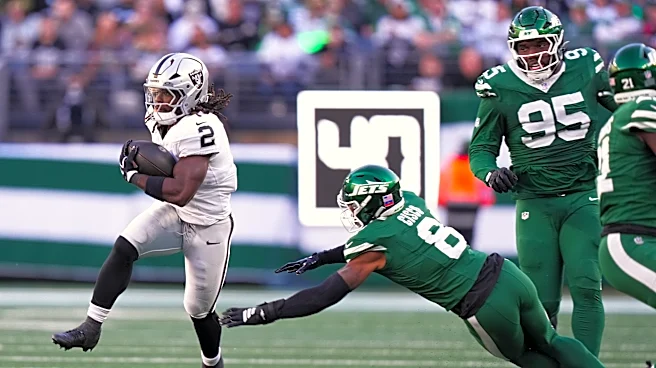
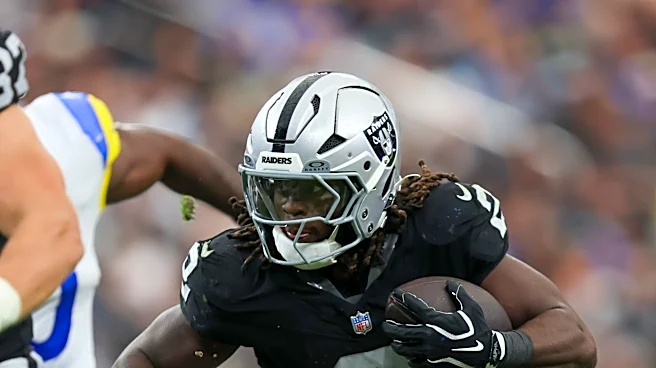
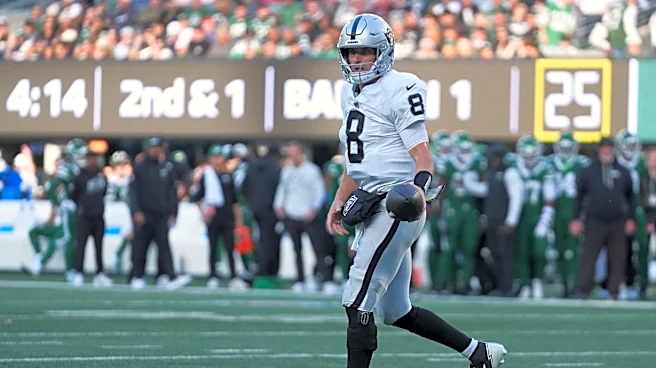
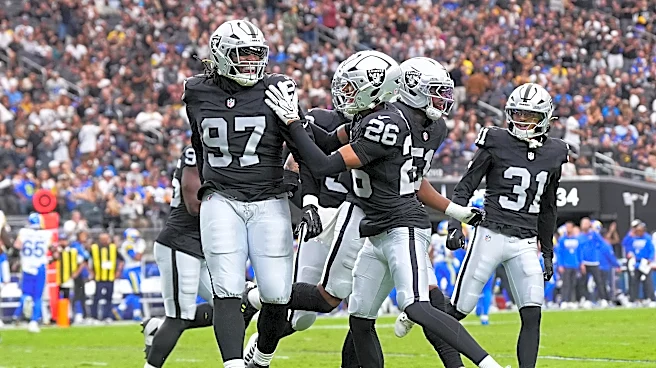
Former New York Jets coach Rex Ryan publicly responded to remarks made by Las Vegas Raiders running back Ashton Jeanty. Ahead of their Sunday matchup, Jeanty predicted success for the Raiders' ground game against the Jets, stating, "Couple of guys out
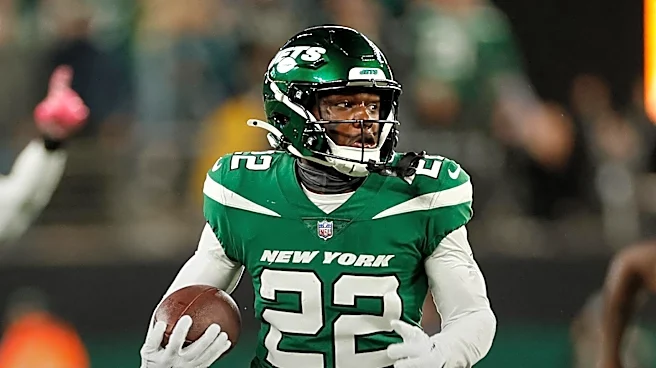
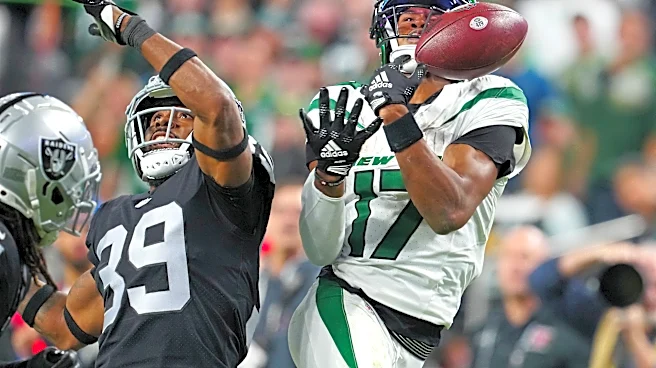
there that don’t really want to tackle, but I’m not going to say names." Ryan, during ESPN’s Sunday NFL Countdown, expressed his intention to confront Jeanty before the game. He criticized Jeanty's performance, calling him "about the worst draft pick in the last 20 years" and highlighting his average of 3.1 yards per carry. Ryan's son, Seth, is the Jets' passing game coordinator, a role previously held by Scott Turner, whose comments about the Jets also garnered attention. The Jets entered the game with a 2-5 record, having recently lost to the Miami Dolphins 28-25.
Why It's Important?
This public exchange between a former NFL coach and a current player adds a layer of personal rivalry and drama to an upcoming professional football game. For the New York Jets, who are struggling with a 2-5 record, such comments could either serve as motivation or further destabilize team morale. For the Las Vegas Raiders, Jeanty's remarks, and Ryan's strong rebuttal, could intensify the competitive atmosphere, potentially influencing player performance and game strategy. The media attention surrounding these comments also highlights the role of sports commentators and former coaches in shaping narratives and generating interest in NFL matchups. The personal nature of Ryan's attack on Jeanty's performance could also spark debate about the appropriateness of such pre-game rhetoric.
What's Next?
The immediate next step is the Sunday matchup between the New York Jets and the Las Vegas Raiders, where all eyes will be on Ashton Jeanty's performance and the Jets' defense. The outcome of the game, particularly Jeanty's rushing yards and the Jets' ability to contain him, will likely be heavily scrutinized in the context of Rex Ryan's comments. Post-game interviews will undoubtedly feature questions about the pre-game trash talk and its impact. Depending on the results, this exchange could either be dismissed as pre-game banter or become a significant talking point in the ongoing narrative of both teams' seasons. Further, this incident might influence how players and commentators engage in public discourse leading up to future games.
Beyond the Headlines
This incident touches upon the evolving landscape of sports media and player-commentator interactions. In an era of constant media coverage and social media, pre-game comments can quickly escalate into viral moments, adding pressure and scrutiny to athletes. It also raises questions about the line between competitive banter and personal attacks, and the responsibility of former coaches and analysts when critiquing current players. The dynamic between former team personnel and current players can be complex, especially when family members are involved in the current team's coaching staff. This event underscores how individual personalities and their public statements can significantly influence the narrative and emotional stakes of professional sports beyond just the game itself.