







What's Happening?
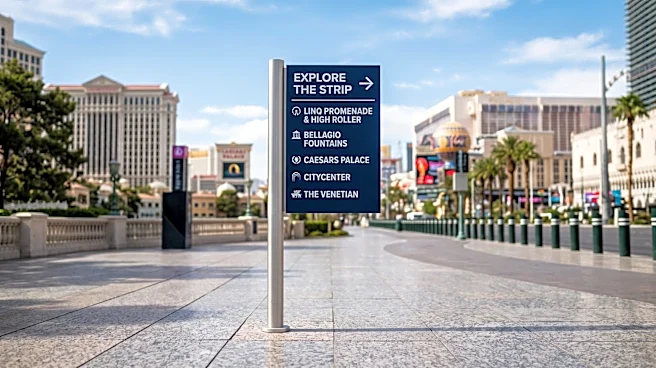
Clark County has initiated the installation of prominent informational signs across high-traffic pedestrian areas on the Las Vegas Strip. These signs are designed to inform tourists that tipping for services is not mandatory but rather a voluntary act.
This move comes amidst ongoing discussions regarding tipping culture and its perception among visitors to the popular entertainment destination. The signs aim to clarify expectations for tourists, potentially addressing concerns about perceived pressure to tip or confusion over tipping etiquette in various establishments. The initiative reflects an effort by local authorities to manage the visitor experience and provide clear communication on common practices within the hospitality industry in Las Vegas.
Why It's Important?
This initiative by Clark County holds significance for both tourists and the local service industry in Las Vegas. For visitors, it provides clarity and potentially reduces any anxiety or confusion surrounding tipping practices, enhancing their overall experience. For the service industry, while tipping is a significant component of many workers' income, this public clarification could lead to varied reactions. Some may view it as a necessary step to manage tourist expectations, while others might be concerned about potential impacts on gratuity levels. The move could also spark broader conversations about wage structures in the service sector and the reliance on tips. It underscores a growing trend of transparency in consumer interactions, particularly in major tourist hubs where diverse cultural norms regarding tipping converge.
What's Next?
The immediate next step will be the full deployment of these informational signs across all targeted pedestrian corridors on the Las Vegas Strip. Following their installation, Clark County authorities and local business associations will likely monitor public and industry feedback to assess the effectiveness and impact of the initiative. There could be subsequent public awareness campaigns or adjustments to the signage based on initial responses. The long-term implications might include a shift in tourist behavior regarding tipping, potentially influencing how service charges are communicated or structured by businesses. This could also prompt further discussions among hospitality stakeholders about best practices for managing customer expectations and supporting service industry workers.
Beyond the Headlines
Beyond the immediate practical implications, Clark County's decision to install signs about voluntary tipping touches upon deeper cultural and economic dynamics. It highlights the evolving relationship between service providers and consumers in a globalized tourist economy, where diverse expectations around gratuities often clash. This move could be seen as an attempt to re-establish a sense of agency for consumers, while also subtly challenging the entrenched norms of tipping culture in the U.S. It might also reflect a broader societal conversation about fair wages and the sustainability of tip-dependent income models. The initiative could set a precedent for other major tourist destinations grappling with similar issues, potentially influencing how transparency and consumer education are approached in the hospitality sector nationwide.