







What's Happening?
ASML Holding N.V. (ASML) and Taiwan Semiconductor Manufacturing Company Limited (TSM) are two critical, yet distinct, players in the global semiconductor industry. ASML, a Dutch company, specializes in designing and servicing advanced semiconductor lithography
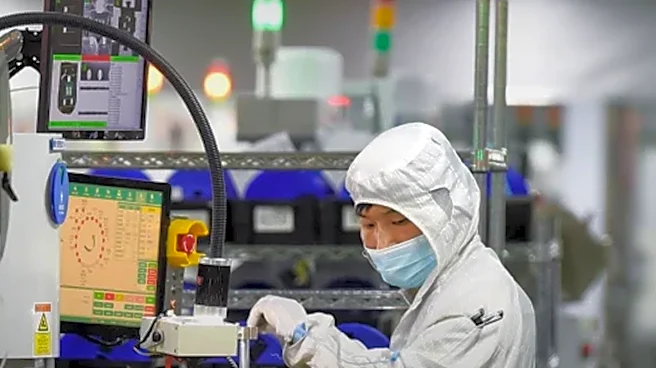
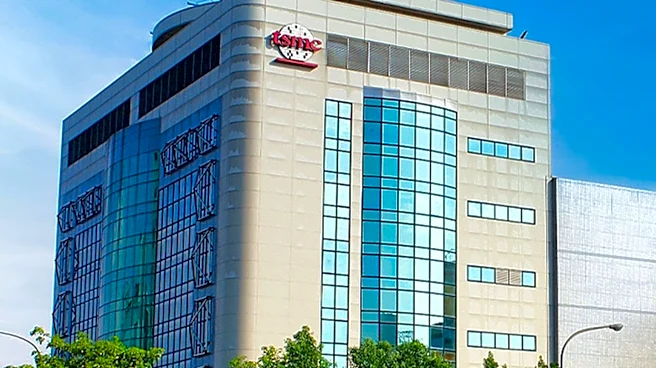
systems, holding a near-monopoly in extreme ultraviolet (EUV) lithography machines. TSM, headquartered in Taiwan, is the world's largest dedicated semiconductor foundry, manufacturing chips for major companies like Apple, Nvidia, and AMD. These companies are not direct competitors but rather occupy adjacent positions in the semiconductor value chain: ASML provides the essential equipment that TSM uses to produce advanced chips. Both are single-company equity securities (ADRs) traded on U.S. exchanges, meaning they carry concentrated single-name risk rather than fund-level diversification.
Why It's Important?
The relationship between ASML and TSM is crucial for the U.S. technology sector and its broader economy. ASML's near-monopoly on EUV lithography technology means that its equipment is indispensable for manufacturing the most advanced semiconductors, which are vital for U.S. innovation in AI, high-performance computing, and defense. TSM, as the leading foundry, produces a significant portion of the world's cutting-edge chips, directly impacting the supply chains of numerous U.S. tech giants. The performance and stability of both companies directly influence the availability and cost of advanced semiconductors in the U.S. Any disruptions to either ASML's production or TSM's manufacturing capabilities could have cascading effects on U.S. industries, from consumer electronics to national security. Their interconnectedness highlights the global nature of the semiconductor supply chain and the U.S.'s reliance on international partners for critical technological components.
What's Next?
The future trajectories of ASML and TSM will continue to be shaped by several factors, including global demand for AI infrastructure, capital expenditure cycles of leading foundries, and geopolitical dynamics. ASML's order book timing and EUV shipment cadence will be key indicators of its performance, while TSM's capacity utilization for advanced process nodes will reflect demand for cutting-edge chips. Both companies face ongoing challenges, such as export controls impacting sales to certain regions and geopolitical risks, particularly for TSM due to its location in Taiwan. Onshoring initiatives in the U.S. and Europe are also expected to reshape the industry's cost structure and supply chain dynamics. Investors and industry observers will closely monitor these developments, as they will influence the strategic decisions and market positions of these two semiconductor giants, ultimately affecting the global supply of advanced chips.
Beyond the Headlines
The symbiotic relationship between ASML and TSM underscores the intricate and interdependent nature of the modern global economy. Beyond their individual financial performance, these companies represent the pinnacle of technological innovation and manufacturing complexity. ASML's dominance in lithography reflects decades of research and development, while TSM's foundry leadership showcases unparalleled manufacturing scale and precision. The challenges they face, such as export controls and geopolitical tensions, highlight the increasing politicization of technology and the strategic importance of semiconductors in national security and economic competitiveness. The U.S.'s efforts to bolster its domestic semiconductor manufacturing capabilities are partly a response to the concentration of advanced chip production in a few key regions, emphasizing the long-term implications of the ASML-TSM dynamic for global power balances and technological sovereignty.