






What's Happening?
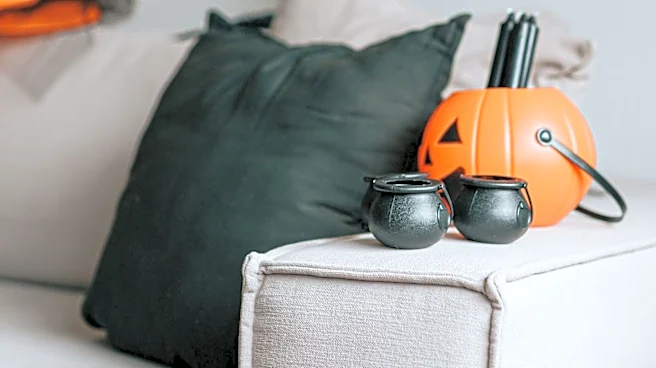
Pottery Barn has launched its new Halloween collection, featuring decor that evokes childhood nostalgia with witches, ghosts, and skeletons. This release comes as retailers are increasingly introducing seasonal merchandise earlier in the year, a trend
dubbed 'Summerween.' The collection aims to blend playful, kitschy elements with sophisticated design, offering items like French Glaze Pumpkins and Skeleton Wine Glasses. According to Devin Toolen, the collection moves away from 'sad beige' seasonal decorating, focusing instead on pieces that bring back memories of traditional Halloween decorations. This early release caters to a growing consumer demand for holiday items well in advance of the actual season, as noted by various retail experts.
Why It's Important?
The early release of seasonal collections, particularly for holidays like Halloween, signifies a notable shift in retail strategy and consumer behavior in the U.S. This trend, exemplified by Pottery Barn's new line, allows retailers to capitalize on extended shopping periods and consumer enthusiasm. For businesses, it means potentially higher sales volumes over a longer duration, but also requires earlier inventory planning and marketing efforts. For consumers, it offers more time to shop and decorate, but could also lead to earlier holiday fatigue or pressure to purchase. The emphasis on nostalgic and playful designs, as seen in Pottery Barn's collection, suggests a consumer desire for comfort and tradition, which can influence product development across various retail sectors. This trend impacts supply chains, marketing budgets, and overall retail seasonality, pushing the boundaries of when holiday shopping traditionally begins.
What's Next?
Retailers are likely to continue and potentially expand the 'Summerween' trend, introducing holiday merchandise even earlier in the calendar year. This could lead to a more compressed timeline for product development and inventory management for businesses. Consumers can expect to see Halloween and other seasonal items appearing on shelves earlier each year, potentially starting in late spring or early summer. This shift may also influence other holiday seasons, such as Christmas and Thanksgiving, prompting earlier launches of related products. Businesses will need to monitor consumer response to these extended shopping periods to optimize their strategies, balancing early demand with the risk of overstocking or consumer burnout. The success of nostalgic and playful themes, as highlighted by Pottery Barn's collection, may also encourage other brands to lean into similar design aesthetics for future seasonal offerings.
Beyond the Headlines
The 'Summerween' phenomenon and the early release of seasonal collections reflect deeper cultural and psychological shifts in American society. The desire for early holiday decor, particularly for Halloween, may stem from a need for escapism and comfort, especially after challenging periods. Holidays offer a sense of routine, joy, and community, and extending their presence can provide a prolonged sense of anticipation and happiness. This trend also highlights the increasing commercialization of holidays, where the focus shifts from a single day to an entire season of consumption. Ethically, it raises questions about consumerism and the potential for overconsumption, as well as the environmental impact of producing and discarding seasonal items earlier and more frequently. Culturally, it blurs the lines between seasons, creating a continuous cycle of holiday preparation that can impact traditional seasonal rhythms and celebrations.