



What's Happening?
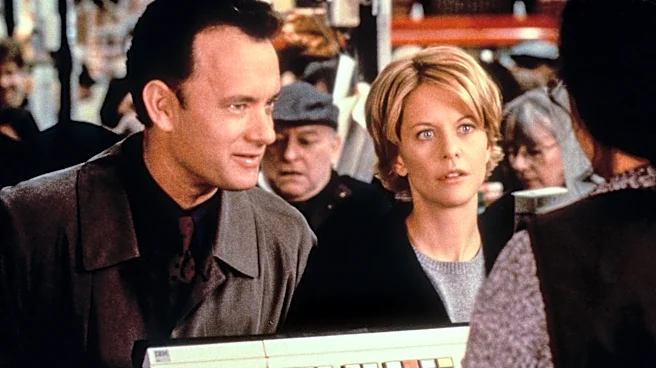
Warner Bros. Pictures is developing a reboot of the 1998 romantic comedy 'You've Got Mail'. Director Jason Orley has been tapped to helm the new film and is also writing the script, based on an earlier version by Deborah Kaplan and Harry Elfont. Plot
details for the new adaptation are currently being kept confidential. The original 'You've Got Mail' starred Tom Hanks and Meg Ryan, depicting business rivals who unknowingly fall in love through anonymous online correspondence. The film itself was an adaptation of the 1937 play 'Parfumerie' by Miklós László, which also inspired the 1940 film 'The Shop Around the Corner' and its subsequent musical adaptations, including 'In the Good Old Summertime' (1949) and the 1963 Broadway show 'She Loves Me'. Jason Orley recently completed post-production on 'Close Personal Friends' for Amazon MGM Studios, a comedy featuring Brie Larson, Jack Quaid, Lilly Collins, and Henry Golding. His previous directorial credits include 'Big Time Adolescence' and 'I Want You Back'.
Why It's Important?
The decision by Warner Bros. Pictures to reboot 'You've Got Mail' reflects a broader trend in the entertainment industry of revisiting established intellectual properties. This strategy aims to capitalize on audience nostalgia and built-in fan bases, potentially offering a more secure investment in a competitive market. For Warner Bros., a successful reboot could generate significant box office revenue and streaming viewership, reinforcing its position in the entertainment landscape. The involvement of Jason Orley, known for his work on contemporary comedies, suggests a modern take on the classic story, which could attract both original fans and new, younger audiences. However, reboots also carry the risk of alienating original fans if the new version deviates too much from the beloved source material or fails to capture its essence. The success of this project could influence future decisions by major studios regarding the revival of other classic films, impacting the types of content produced and distributed across the U.S. entertainment sector.
What's Next?
The immediate next steps for the 'You've Got Mail' reboot involve the continued development of the script by Jason Orley and subsequent casting announcements. As plot details are currently under wraps, further information regarding the film's narrative direction and how it will update the original premise for a contemporary audience is anticipated. Following script completion and casting, the project will move into pre-production, including location scouting and set design, before principal photography begins. The film's release strategy, whether primarily theatrical or a hybrid release with a streaming component, will likely be determined closer to the production's completion. The reception of Orley's recently completed film, 'Close Personal Friends,' could also provide an indication of his current directorial style and its potential impact on the 'You've Got Mail' reboot. Industry observers will be watching to see how Warner Bros. navigates the balance between honoring the original and introducing fresh elements to appeal to a new generation of viewers.
Beyond the Headlines
The reboot of 'You've Got Mail' highlights the evolving nature of storytelling in the digital age, particularly how classic narratives are reinterpreted for contemporary audiences. The original film's premise, centered on anonymous online correspondence, was groundbreaking for its time, reflecting the nascent stages of internet communication. A modern reboot will inevitably need to address the significant advancements in digital interaction, social media, and online dating, which have fundamentally changed how people connect. This presents both a creative challenge and an opportunity to explore themes of identity, authenticity, and connection in an era saturated with digital interfaces. The project could spark discussions about the enduring appeal of romantic comedies and how they adapt to societal changes. Furthermore, it underscores the economic pressures on studios to leverage existing intellectual property, raising questions about originality versus commercial viability in Hollywood. The success or failure of this reboot could influence future trends in film production, potentially leading to more reboots of beloved classics or a renewed focus on original content.