


What's Happening?
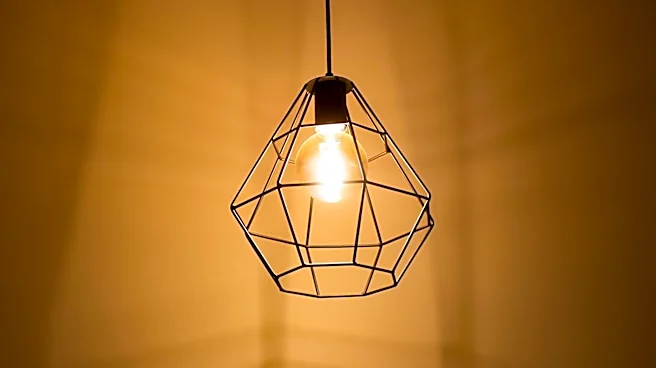
Contemporary lighting trends are focusing on statement pieces like modern chandeliers and LED pendant lights to enhance home interiors, particularly in minimalistic spaces. These lighting fixtures are designed to be both functional and aesthetically pleasing,
serving as focal points in living rooms, dining areas, and kitchens. Wooden chandeliers and pendant lights are gaining popularity for their natural charm and ability to add warmth and texture. In living rooms, large chandeliers or unique wooden pendant lights can create a dramatic centerpiece. For kitchens, narrow wooden pendant lights are favored for their dual purpose of illumination and decoration over islands. Bedrooms benefit from layered lighting, combining wood pendant lighting with softer ambient lights to create depth and mood. The emphasis is on clean lines, simplicity, and the use of innovative materials to complement modern aesthetics.
Why It's Important?
The shift towards statement lighting reflects a broader trend in interior design where lighting is viewed as a crucial design element rather than just a functional necessity. This approach allows homeowners to personalize their spaces and create specific ambiances. The integration of natural materials like wood in lighting fixtures aligns with growing consumer preferences for organic and sustainable design elements. For the U.S. home decor and lighting industries, this trend signifies a demand for more sophisticated, design-centric products. Manufacturers and retailers focusing on modern chandeliers, LED pendant lights, and wooden lighting solutions stand to gain. Consumers benefit from a wider array of choices that can transform their living spaces, enhancing both visual appeal and functionality, while also contributing to energy efficiency with LED options.
What's Next?
The trend of incorporating statement lighting is expected to continue, with further innovations in materials, designs, and smart lighting integration. Manufacturers will likely explore more sustainable and unique materials for fixtures, alongside advancements in LED technology for greater energy efficiency and customizable lighting experiences. Designers may increasingly recommend layered lighting schemes that combine different types of fixtures to achieve optimal ambiance and functionality in various rooms. We can anticipate a rise in demand for lighting solutions that offer smart home compatibility, allowing users to control brightness, color temperature, and scheduling via smart devices. Retailers will likely expand their offerings of modern chandeliers and LED pendant lights, catering to diverse aesthetic preferences and functional needs.
Beyond the Headlines
Beyond the immediate aesthetic appeal, the emphasis on statement lighting reflects a deeper cultural shift towards valuing curated and personalized home environments. In an increasingly digital world, physical spaces are becoming more important as sanctuaries for comfort and self-expression. Thoughtfully designed lighting contributes significantly to well-being, influencing mood, productivity, and relaxation. The preference for natural materials like wood in lighting also speaks to a desire for connection with nature and a move away from purely synthetic environments. This trend could also spur innovation in lighting design education and craftsmanship, fostering a new generation of designers who blend art, technology, and sustainability in their creations, ultimately elevating the role of lighting in architectural and interior design.