

What's Happening?
Pilates instructor Abby McLachlan, founder of East of Eden studio, emphasizes that at-home Pilates can be highly effective for building core strength and stability with minimal time commitment. According to McLachlan, even a 15-minute or 20-minute daily
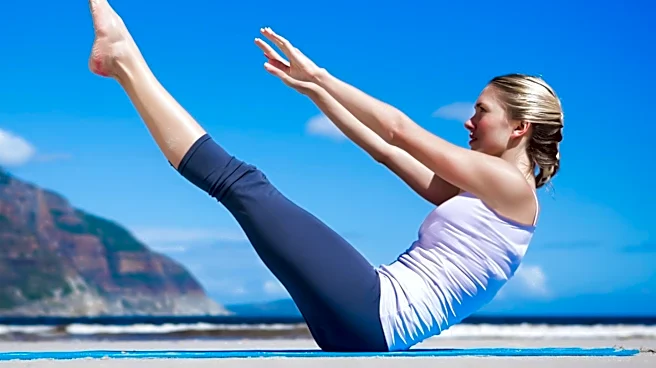
session can yield significant results. She outlines four specific exercises that can be completed in under half an hour, including rest, to boost core strength and stability without placing pressure on the spine, unlike exercises such as planks. These exercises are roll downs, toe taps, the Hundred, and glute bridges. McLachlan notes that roll downs mobilize the spine and engage the core, toe taps activate deep core muscles, the Hundred strengthens upper abs, and glute bridges improve spinal articulation while strengthening the posterior chain, glutes, and hamstrings. Pilates is also highlighted as suitable for beginners and adaptable for individuals with injuries, potentially aiding in back health by strengthening core and hip muscles through low-impact, controlled movements.
Why It's Important?
This information is important for individuals seeking efficient and accessible methods to improve their physical well-being, particularly core strength and stability. The emphasis on short, effective workouts addresses a common barrier to exercise: lack of time. By providing specific, low-impact exercises, McLachlan offers a practical solution for those who may have back concerns or are new to fitness, potentially reducing the risk of injury associated with high-impact routines. The focus on core strength is crucial for overall physical health, supporting posture, balance, and reducing back pain, which can impact daily life and productivity. For the fitness industry, this highlights the continued relevance and adaptability of Pilates, especially in the context of at-home workouts and personalized fitness routines, catering to a broader demographic seeking health benefits without intensive gym commitments.
What's Next?
Individuals interested in improving their core strength and stability can integrate these four Pilates exercises into their daily routines. The accessibility of these movements, requiring minimal equipment (primarily a yoga mat), suggests a potential increase in at-home Pilates practice. Fitness platforms and instructors may further develop and promote short, targeted Pilates sessions, capitalizing on the demand for efficient and effective workouts. There could also be a continued trend towards hybrid fitness approaches that combine elements of Pilates with other forms of exercise, as seen in programs that blend strength training with Pilates-inspired movements. This approach caters to a diverse range of fitness goals, from muscle building to improved mobility and control, indicating a shift towards more holistic and integrated fitness methodologies.
Beyond the Headlines
The popularity of short, effective workouts like those described in Pilates reflects a broader cultural shift towards optimizing time and seeking sustainable health practices. This trend extends beyond physical fitness, influencing how individuals approach personal development and well-being in a fast-paced world. The emphasis on low-impact exercises also speaks to a growing awareness of injury prevention and long-term body maintenance, moving away from solely high-intensity training. Ethically, promoting accessible and adaptable exercises like Pilates can contribute to greater inclusivity in fitness, allowing more people, regardless of their physical condition or experience level, to engage in beneficial physical activity. This approach fosters a more mindful connection with the body, prioritizing controlled movement and stability over sheer exertion, which can have positive psychological benefits alongside physical improvements.