


What's Happening?
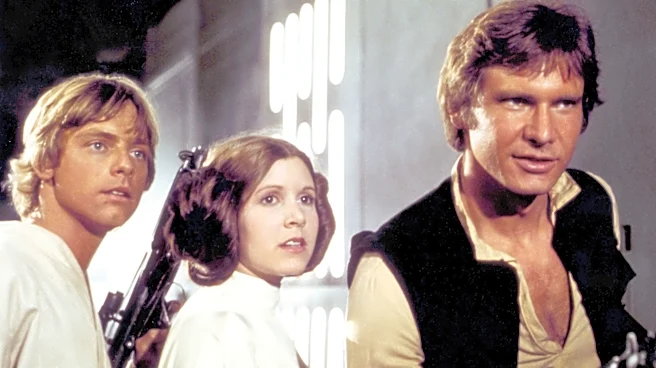
Paul Hirsch, Richard Chew, and Marcia Lucas were awarded an Oscar for Best Film Editing for 'Star Wars' at the Academy Awards. This was one of six competitive Oscars the film received. However, subsequent re-edits and reconceptualizations by George Lucas have
altered the film, impacting the integrity of most of these award-winning aspects. The editing, in particular, was directly affected by the Special Editions, meaning the award-winning version of the film has not been seen in its original form for decades. The original 1977 edit of 'Star Wars' is scheduled for a limited theatrical re-engagement on February 19th, 2027, to celebrate its 50th anniversary, allowing audiences to experience the film as it was originally recognized by the Academy.
Why It's Important?
This situation highlights a significant debate within the film industry regarding artistic integrity, creator's rights, and the preservation of original works, especially those recognized with prestigious awards like the Oscars. While a creator like George Lucas has the legal right to modify their work, the re-editing of 'Star Wars' has been viewed by some as disrespectful to the original creative team and the fans who appreciated the initial version. The re-release of the 1977 edit offers a rare opportunity for audiences to witness the film in its award-winning form, potentially reigniting discussions about the balance between artistic evolution and historical preservation in cinema. It also underscores the value placed on film editing as a critical component of a movie's success and artistic merit.
What's Next?
The limited theatrical re-engagement of the original 1977 'Star Wars' on February 19th, 2027, will allow audiences to experience the film as it was originally edited and awarded. This event is anticipated to be a significant moment for film enthusiasts and critics, offering a chance to compare the original version with the later re-edits. The re-release could also prompt further discussions within the film community about the long-term implications of altering award-winning cinematic works. It may also influence future practices regarding the preservation and exhibition of original film versions, especially for culturally significant movies.
Beyond the Headlines
The controversy surrounding the re-editing of 'Star Wars' touches upon deeper ethical and cultural dimensions within the arts. It raises questions about whether a work, once released and critically acclaimed, should remain immutable, particularly when its original form has been honored. This scenario reflects a broader tension between an artist's evolving vision and the public's attachment to a work's initial presentation. The re-release of the original cut could serve as a precedent or at least a strong argument for the importance of preserving and making accessible the original versions of films, especially those that have achieved iconic status and received significant industry recognition. It also highlights the power of editing in shaping a film's narrative and emotional impact.