



What's Happening?
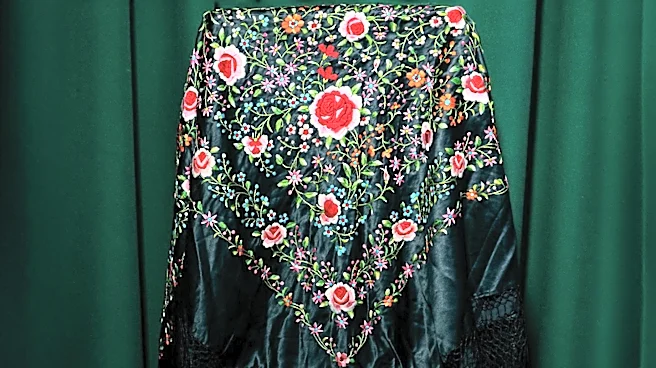
Zara has launched a new dress inspired by traditional Manila shawls, priced at 79.95 euros. This satin gray design features embroidered fabric and fringes, and is quickly selling out on the company's website. The dress is part of Zara's ZW Collection,
which aims to elevate its offerings for special occasions. The design is noted for its resemblance to a two-piece set, offering a fluid silhouette with a defined waist, making it a versatile and flattering option. This release comes as September approaches, a peak season for weddings and baptisms, driving demand for unique occasion wear.
Why It's Important?
This move by Zara highlights a growing trend in the fashion industry where traditional cultural elements are reinterpreted for contemporary markets. The affordability of the dress, under 80 euros, makes high-fashion-inspired designs accessible to a broader consumer base, democratizing trends often seen on international runways and in street style. The rapid sell-out indicates strong consumer interest in unique, culturally-inspired pieces that offer both style and value. This strategy allows Zara to capture market share in the occasion wear segment by providing fashionable yet economical alternatives to more expensive designer options, influencing fast fashion trends and consumer purchasing habits.
What's Next?
Given the success of this Manila shawl-inspired dress, Zara is likely to continue incorporating traditional and culturally rich designs into its collections. Other fast-fashion retailers may follow suit, leading to a broader trend of global cultural influences in mainstream fashion. Consumers can anticipate more affordable interpretations of high-end and traditional designs. The demand for versatile and flattering occasion wear is expected to remain strong, especially during peak event seasons, prompting retailers to innovate with designs that offer both aesthetic appeal and practical wearability.
Beyond the Headlines
The integration of traditional designs like the Manila shawl into fast fashion raises questions about cultural appreciation versus appropriation. While it introduces global aesthetics to a wider audience, it also prompts discussions on the origins of such designs and the economic benefits for the communities that traditionally produce them. This trend could encourage consumers to explore the cultural significance behind their clothing choices, fostering a deeper understanding of global craftsmanship. It also underscores the power of fast fashion to quickly disseminate and popularize specific aesthetic trends, potentially influencing design directions across the industry.