







What's Happening?
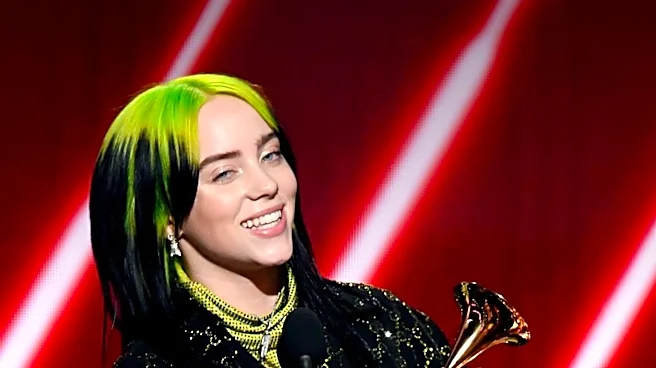
Singer-songwriter Billie Eilish discussed her experience with Tourette syndrome and the exhausting process of suppressing her tics during an interview on Amy Poehler's podcast, 'Good Hang With Amy Poehler,' in May 2026. Eilish revealed that she constantly
uses 'everything in her power' to suppress her tics, especially in public settings like interviews or performances. This revelation addresses skepticism from some who questioned the authenticity of her condition due to a lack of visible tics in certain appearances. Experts, including neurologist Dr. Michael Okun, confirm that tic suppression is a common and often exhausting aspect of living with Tourette syndrome, and it does not indicate that the condition is voluntary or faked. The ability to temporarily control tics is a hallmark of the disorder and is even a foundation for modern treatments.
Why It's Important?
Billie Eilish's public discussion about tic suppression is crucial for increasing understanding and compassion for individuals with Tourette syndrome. Her celebrity status amplifies awareness, challenging common misconceptions that often lead to judgment and skepticism. By explaining the intense effort required to suppress tics, Eilish helps to educate the public that the absence of visible tics does not equate to the absence of the condition. This insight is vital for fostering a more informed and empathetic society, particularly in educational and professional environments where individuals with Tourette's might face misunderstanding. It also highlights the 'invisible' symptoms, such as anxiety, obsessive-compulsive symptoms, and ADHD, which often have a greater impact on quality of life than the tics themselves, underscoring the need for comprehensive support.
What's Next?
Increased public awareness, spurred by figures like Billie Eilish, is likely to lead to greater advocacy for understanding and supporting individuals with Tourette syndrome. This could translate into more inclusive policies in schools and workplaces, better resources for diagnosis and treatment, and reduced stigma. The discussion also reinforces the importance of behavioral interventions, such as comprehensive behavioral intervention for tics (CBIT), which teaches individuals to recognize and respond to premonitory urges to reduce tic frequency. Continued open dialogue from public figures can encourage more people to seek diagnosis and treatment, and help those around them to offer appropriate support, moving beyond superficial judgments based on visible symptoms.
Beyond the Headlines
The conversation around Billie Eilish's Tourette syndrome extends beyond medical understanding to broader societal issues of disability representation and authenticity. It challenges the expectation that disabilities must always be visibly apparent to be considered 'real,' pushing back against the tendency to invalidate experiences that don't fit preconceived notions. This narrative contributes to a larger movement advocating for the recognition of invisible disabilities and the complex ways they manifest. Furthermore, it highlights the mental and emotional toll of constantly managing a condition in public, offering a glimpse into the daily struggles many individuals face. Eilish's openness fosters a culture where individuals feel more comfortable sharing their experiences, potentially leading to a more accepting and accommodating world for those with neurological differences.