








What's Happening?
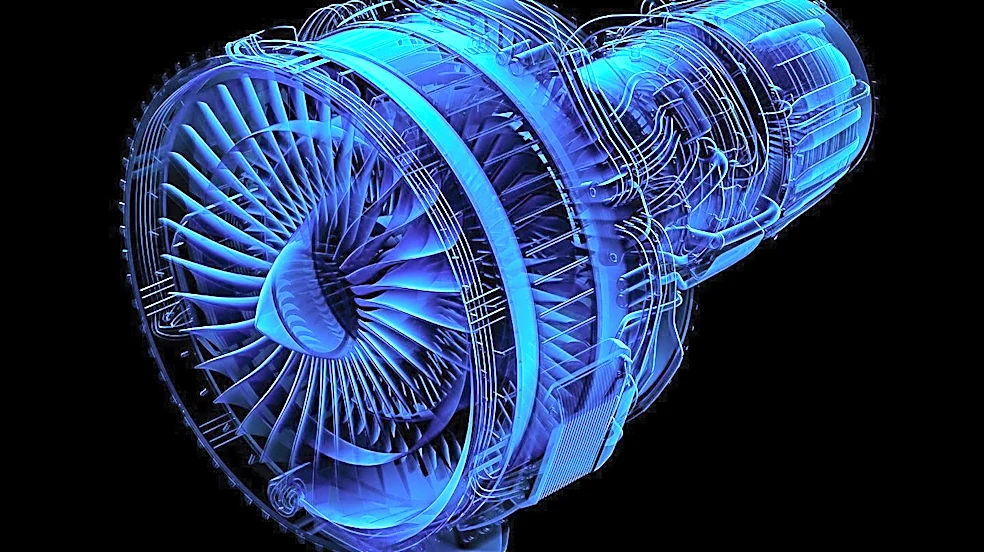
Honeywell Aerospace is progressing with its plans to test advanced cores for an upgraded next-generation HTF7000 super midsize engine and a larger HTF derivative capable of up to 12,000 lb. thrust. This development work is based on proprietary company
technology, with some aspects receiving support from the Federal Aviation Administration's (FAA) Continuous Lower Energy, Emissions and Noise (CLEEN) program. Under the recently announced Phase IV of CLEEN, Honeywell will conduct tests on an advanced axi-centrifugal compressor, further refine a low-emissions combustion system developed in the previous CLEEN phase, and evaluate advanced turbine coatings. Nearer-term testing involves a demonstrator high-pressure (HP) core under CLEEN Phase III, which is now scheduled for the first half of 2027 to incorporate lessons learned from related component and module tests. John Head, Honeywell Aerospace vice president and general manager for engines, stated that the delay allows for the integration of additional elements to enhance testing efficiency.
Why It's Important?
This initiative by Honeywell Aerospace is significant for the U.S. aviation industry, particularly in the business jet sector. The development of more fuel-efficient and quieter engines directly addresses growing environmental concerns and regulatory pressures regarding aircraft emissions and noise pollution. The FAA's involvement through the CLEEN program underscores a national commitment to fostering sustainable aviation technologies. Improved engine performance and reduced environmental impact can lead to lower operating costs for airlines and business jet operators, potentially stimulating demand for new aircraft and engine upgrades. Furthermore, the advancements in compressor, combustion, and turbine coating technologies could establish new benchmarks for aerospace engineering, enhancing the competitiveness of U.S. aerospace manufacturers globally. This investment in research and development also supports high-skilled jobs within the U.S. aerospace sector.
What's Next?
Honeywell plans to run the demonstrator high-pressure core under CLEEN Phase III in the first half of 2027, incorporating insights from ongoing component and module tests. Following this, a full-size core for the HTF Next-Gen engine is slated for testing in late 2027 or early 2028. The company aims for these next-generation engines to enter service in the 2030s, targeting a reduction of approximately 3 PNLdB in noise and an 8% or more improvement in fuel efficiency compared to current HTF7000 class engines. Emissions are also targeted for dramatic reductions, aiming for a 70% margin to CAEP/8 standards for NOx and a 70% reduction in non-volatile particulate matter. These tests and subsequent developments will be crucial in validating the performance claims and ensuring the engines meet future environmental and operational requirements.
Beyond the Headlines
The long-term implications of Honeywell's engine development extend beyond immediate performance gains. The focus on significantly reducing noise and emissions aligns with broader global efforts to decarbonize the aviation industry and mitigate its environmental footprint. This could influence future aircraft design and operational standards, potentially leading to more stringent regulations for older, less efficient engines. The collaboration with the FAA through the CLEEN program highlights a model for public-private partnerships in advancing critical technologies that benefit both industry and the public good. Success in these areas could also bolster the U.S.'s leadership in aerospace innovation, attracting further investment and talent to the sector. The emphasis on 'dual-purpose technology development' suggests that advancements made for business jets could eventually trickle down or be adapted for other aviation segments, including commercial air travel.