







What's Happening?
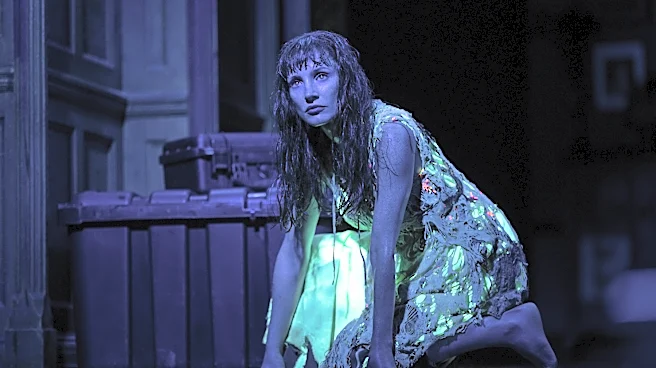
Léa Seydoux stars as Lucy in the new film 'Gentle Monster,' which delves into themes of moral and societal evils within a family context. The movie, directed by Marie Kreutzer, initially presents Lucy, her partner Philip (Laurence Rupp), and their son
Johnny (Malo Blanchet) as a loving family. Their peaceful life in the German countryside is disrupted when police confiscate Philip's computer and hard drives, revealing an investigation into his involvement with child sexual abuse images. Lucy is left to process this devastating information, grappling with denial and the potential implications for her family, including the possibility that her son might be a victim. Seydoux's portrayal of Lucy is noted for its understated yet powerful performance, capturing the character's internal struggle without overt dramatic displays. The film also touches upon the complexities faced by law enforcement, as seen through the character of officer Elsa Kuhn (Jella Haase), whose professional black-and-white view of justice is contrasted with her personal compromises.
Why It's Important?
The film 'Gentle Monster' is important for its unflinching exploration of a deeply disturbing societal issue: child sexual abuse and the complicity that can arise when loved ones are involved. By presenting a seemingly normal family dynamic before revealing the dark truth, the movie challenges audiences to confront uncomfortable realities about how evil can manifest within seemingly ordinary lives. It prompts viewers to question their own biases and the tendency to overlook or excuse problematic behavior in those they care about. The film's narrative, inspired by real-world reports of pedophile networks, highlights the pervasive nature of such crimes and the profound impact they have on victims and their families. Seydoux's nuanced performance is crucial in conveying the psychological toll of such a discovery, making the film a significant commentary on denial, trust, and the difficult process of confronting harsh truths.
What's Next?
The film 'Gentle Monster' is scheduled for a theatrical release on Friday, followed by streaming availability on November 18 via Netflix. Its release will likely spark discussions among audiences and critics regarding its sensitive subject matter and its approach to depicting such a difficult topic. The film's exploration of moral ambiguity and the lack of easy resolutions may lead to varied interpretations and debates about its message. Given its R rating for 'graphic nudity, some language and sexuality,' it is intended for mature audiences, suggesting that its content is handled with a certain level of intensity. The film's availability on a major streaming platform like Netflix will ensure a wide reach, potentially amplifying its impact and the conversations it generates about societal evils and personal complicity.
Beyond the Headlines
Beyond its immediate narrative, 'Gentle Monster' delves into deeper ethical and psychological implications. The film challenges the common trope of villains appearing overtly evil, instead presenting a perpetrator who is initially perceived as a loving family man. This approach forces viewers to confront the uncomfortable idea that evil can reside in unexpected places and that appearances can be deeply deceptive. It also explores the psychological defense mechanisms, such as denial, that individuals employ when faced with unbearable truths about loved ones. The film subtly critiques societal tendencies to rationalize or ignore uncomfortable realities, urging a closer examination of the world around us. By not offering clear resolutions, the movie leaves audiences with a lingering sense of unease, prompting introspection about personal responsibility and the complexities of human morality in the face of profound wrongdoing.