







What's Happening?
The AI pet tech market is experiencing rapid growth, with projections indicating a substantial increase by 2026. This expansion is fueled by advancements in AI and machine learning, leading to the development of sophisticated devices for pet monitoring,
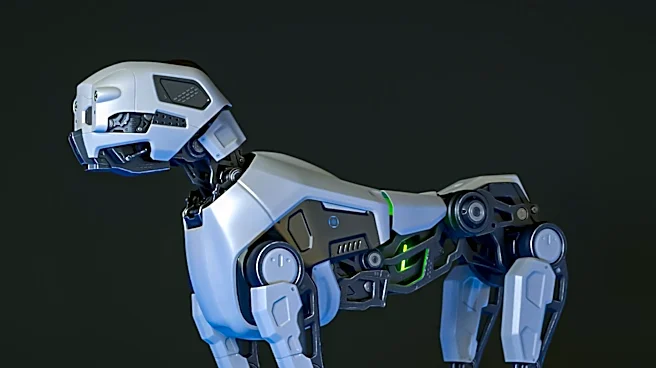
health tracking, and companionship. The market, which includes pet gadgets, smart devices, and companion robots, is seeing a significant shift towards hardware that serves as a gateway to recurring software and subscription revenues. Companies like Videostrong are contributing to this trend by developing AI algorithm modules for real-world companion hardware, focusing on reliable performance in varied home environments. These technologies enable features such as person classification, pet detection, familiar face recognition, and behavioral pattern analysis, often with on-device inference to protect privacy. The market is characterized by three main categories: pet robots, pet cameras, and smart collars, each with distinct growth drivers and margin structures. Over 80 new AI-powered pet devices were launched globally between 2023 and 2025, underscoring the rapid innovation in this sector.
Why It's Important?
The surge in the AI pet tech market reflects a broader societal trend of pet humanization, where pets are increasingly viewed as family members, leading owners to invest in advanced care solutions. This market growth has significant implications for distributors and brand owners, as it presents new opportunities for revenue generation, particularly through subscription-based models. The shift from one-off hardware sales to recurring revenue streams, exemplified by companies like Fi expecting substantial Annual Recurring Revenue (ARR), indicates a fundamental change in the business landscape of the pet industry. The competitive environment is dynamic, with consumer-electronics giants entering the market alongside specialized pet-robot firms and niche players. This competition drives innovation and offers consumers a wider array of advanced products. Furthermore, the emphasis on privacy-preserving architecture, with on-device inference for sensitive data like video, addresses growing consumer concerns about data security, making it a key selling point and a compliance necessity in the U.S. market.
What's Next?
The AI pet tech market is expected to continue its rapid expansion, with companion robots projected to be the fastest-growing segment. Distributors are advised to focus on a mix of volume and margin, with smart collars providing volume and recurring revenue, while companion robots offer premium margins and brand differentiation. The market will likely see further consolidation, as evidenced by recent acquisitions and the entry of major consumer-electronics companies. This suggests that the competitive landscape will become more defined, with leaders emerging in various sub-categories. Compliance with rising safety and wireless standards (e.g., FCC in the U.S.) will be crucial for manufacturers and distributors. Investment in pet-monitoring AI ventures is also on the rise, indicating continued innovation and the potential for new technologies to emerge. The focus on subscription models will intensify, making it essential for suppliers to build business models around recurring revenue rather than just hardware sales.
Beyond the Headlines
The rapid growth of AI pet tech extends beyond mere convenience, touching upon deeper ethical and societal considerations. The ability of AI to monitor animal behavior and detect signs of illness or stress raises questions about the extent of technological intervention in animal welfare and the potential for over-reliance on AI for pet care. While the technology aims to improve animal well-being, it also introduces discussions about data privacy, especially with on-device inference and the collection of sensitive behavioral data. The humanization of pets, a key driver for this market, reflects evolving cultural values and the changing role of animals in human lives. The development of AI-powered enrichment devices to combat pet anxiety and destructive behavior highlights a growing awareness of pets' emotional needs. This trend could lead to a future where AI plays a more integral role in understanding and responding to animal sentience, potentially influencing veterinary practices, animal behavior research, and even the legal status of animals.