





What's Happening?
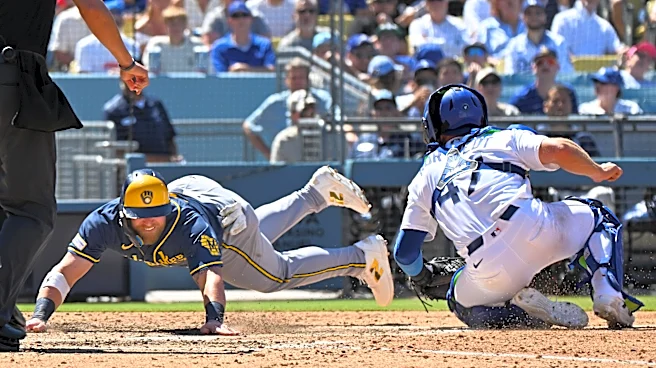
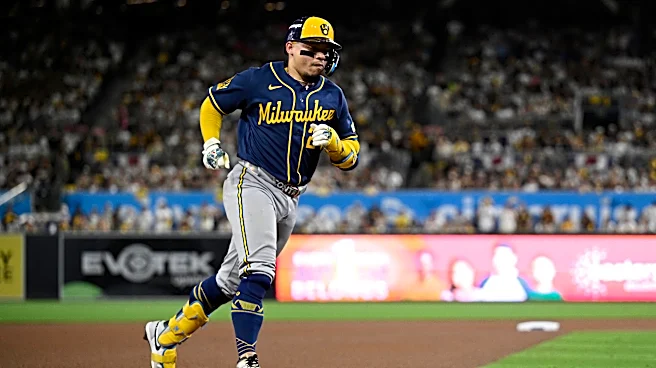
William Contreras, a prominent catcher for the Milwaukee Brewers, has publicly stated his reluctance to play for either the New York Yankees or the New York Mets. His primary reason for this stance is the high tax rate in New York, which he noted is approximately
52%. Contreras, who is nearing free agency and will be eligible for arbitration in 2027, indicated that this high tax burden significantly reduces a player's take-home salary. He also suggested that teams in California would likely be excluded from his considerations for similar tax-related reasons. Contreras has been with the Brewers for four years, establishing himself as a strong offensive and defensive player in Major League Baseball.
Why It's Important?
Contreras's comments highlight a significant factor that can influence player decisions in professional sports: state and local tax rates. For high-earning athletes, the difference in tax obligations between states can amount to millions of dollars over the course of a contract. This preference for lower-tax markets could impact the competitiveness of teams in states like New York and California, which are home to some of the wealthiest and most historically successful franchises in baseball. These teams might find it more challenging to attract top-tier talent if players prioritize maximizing their net income, potentially forcing them to offer even larger gross salaries to compensate for the tax differential. This dynamic could shift the balance of power in free agency, benefiting teams in states with more favorable tax environments.
What's Next?
As William Contreras approaches free agency before the 2028 season, his stated preference for lower-tax markets will likely influence his contract negotiations and potential destinations. Teams in New York and California, including the Yankees, Mets, Dodgers, and Angels, may need to consider offering more lucrative contracts to offset the tax implications if they wish to sign him. Contreras's comments could also prompt other athletes to publicly weigh tax rates in their career decisions, potentially leading to a broader discussion within professional sports about the financial impact of playing in high-tax jurisdictions. His arbitration eligibility in 2027 will be a precursor to his full free agency, providing an early indication of his market value and the financial considerations at play.
Beyond the Headlines
The issue raised by William Contreras extends beyond individual player preferences, touching upon broader economic and ethical considerations within professional sports. The disparity in state tax laws creates an uneven playing field, where teams in certain regions face an inherent disadvantage in attracting talent, regardless of their financial resources or team success. This situation can lead to debates about fair competition and the role of taxation in professional sports. It also underscores the complex financial planning required for athletes, who often have short career windows to maximize their earnings. The 'tax haven' aspect of certain states could become an increasingly prominent factor in player recruitment, potentially influencing team strategies and even league-wide policies in the long term.