





What's Happening?
Christopher Nolan's film, 'The Odyssey,' has achieved unprecedented success at Chattanooga's Tennessee Aquarium IMAX 3D Theater, selling out every screening since its July 16 premiere. Corey Cobb, the theater's director of IMAX operations, confirmed that
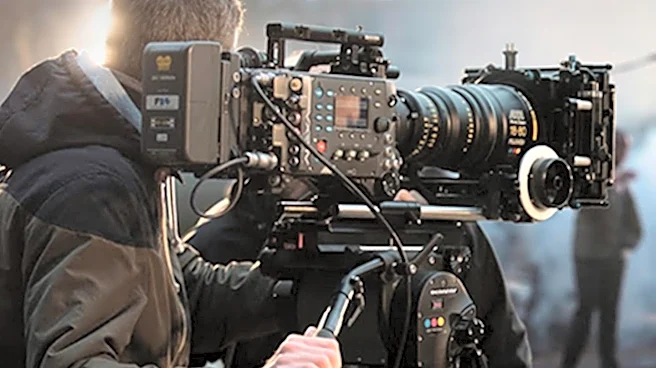
approximately 36,000 tickets have been sold, shattering previous records held by Nolan's 'Oppenheimer' in 2023, which sold around 8,000 tickets. The film's popularity has led the aquarium IMAX theater to extend its run into mid-September. 'The Odyssey' is notable for being the first feature-length film shot entirely on IMAX 70mm film, and the Chattanooga theater is one of only 25 in the U.S. capable of screening it in this native format. The theater even reinstalled its original IMAX 70mm film projector for this showing, a projector that had been replaced by a digital system in 2016 but was kept by Cobb due to its historical significance. The success highlights a strong public appetite for premium movie formats and unique cinematic experiences.
Why It's Important?
The overwhelming success of 'The Odyssey' at the Tennessee Aquarium IMAX 3D Theater underscores a significant trend in the U.S. entertainment industry: the demand for premium, immersive cinematic experiences. In an era where streaming services and home entertainment systems offer convenience, this phenomenon demonstrates that audiences are willing to seek out and pay for unique theatrical presentations that cannot be replicated at home. This could encourage other theaters to invest in advanced projection technologies, such as IMAX 70mm, or to revive older, high-quality formats to attract moviegoers. For the film industry, it suggests that event-like screenings and films specifically designed for large-format exhibition can drive substantial box office revenue, potentially influencing future production and distribution strategies. The broad appeal, with ticket buyers from 45 states and even Quebec, also highlights the potential for specialized theaters to become regional or national destinations, boosting local tourism and economies.
What's Next?
Following the success of 'The Odyssey,' the Tennessee Aquarium IMAX theater has already opened ticket sales for 'Dune: Part Three,' which is scheduled for release in December and will also be screened on 70mm film. Corey Cobb reported that 'Dune: Part Three' surpassed 'The Odyssey's' presale numbers within the first hour, indicating continued strong demand for premium film experiences. This suggests a potential resurgence in the use of 70mm film projection for major releases, especially those from acclaimed directors known for their visual storytelling. Other theaters capable of showing films in this format may follow suit, leading to a broader trend of re-embracing traditional film projection alongside digital advancements. The sustained interest could also prompt studios to consider shooting more films in formats optimized for such large-scale, high-fidelity presentations, further solidifying the niche market for 'event cinema.'
Beyond the Headlines
The reinstallation and successful utilization of the IMAX 70mm film projector for 'The Odyssey' at the Tennessee Aquarium IMAX theater points to a deeper cultural and technological dynamic within the film industry. It signifies a potential shift away from the exclusive pursuit of digital formats and a renewed appreciation for the aesthetic and experiential qualities of traditional film. This move could be seen as a form of 'analog revival' in cinema, similar to the resurgence of vinyl records in music, where the physical medium offers a distinct and valued experience. Ethically, it raises questions about preservation and the value of historical technology in a rapidly evolving digital landscape. Corey Cobb's decision to keep the old projector, initially for historical reasons, has now proven to be a prescient move, highlighting the long-term value of maintaining diverse technological capabilities. This trend could foster a new generation of cinephiles who appreciate the nuances of different film formats and encourage a more balanced approach to cinematic innovation, blending the best of both analog and digital worlds.