






What's Happening?
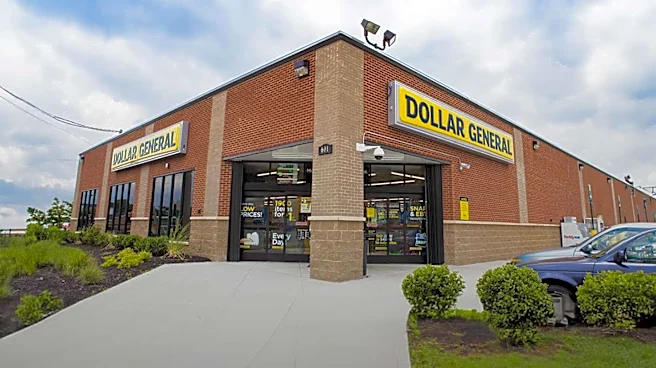
Dollar General and Aldi are set to significantly expand their U.S. footprints in 2026, focusing on small-format retail strategies. Dollar General plans to open approximately 450 new U.S. stores, adding to its existing 21,148 locations. The company's strategy,
as highlighted by CEO Todd Vasos, targets rural towns, with about 80% of its stores serving communities of 20,000 people or fewer. Dollar General also intends to undertake about 4,730 real estate projects in fiscal 2026, including 2,000 Project Renovate remodels and 2,250 Project Elevate remodels. The company reported a 5.2% increase in net sales to $11.3 billion and a 3.5% rise in same-store sales in its second quarter of fiscal 2026. Meanwhile, Aldi plans to open over 180 new stores across 31 states, aiming to reach nearly 2,800 U.S. locations. Aldi's U.S. chief operating officer, Dave Rinaldo, noted that the chain attracted 17 million new customers in 2025, attributing this success to its smaller store footprint and curated private label selection. Aldi also plans to convert about 80 Southeastern Grocers storefronts and enter Maine, its 40th state.
Why It's Important?
The aggressive expansion by Dollar General and Aldi underscores a growing trend in the U.S. retail sector towards small-format stores that prioritize price, convenience, and a curated selection. This strategy directly impacts consumer access to goods, particularly in underserved rural areas where Dollar General focuses its growth. For consumers, this means increased accessibility to discount retail options, potentially offering relief amidst inflationary pressures. For the broader retail industry, this expansion signals a continued shift in competitive dynamics, challenging larger retailers that rely on breadth of inventory. The success of these models suggests that a focused approach on specific customer needs—such as affordability and quick shopping trips—can drive significant market share. The emphasis on private labels by Aldi also impacts national brands, as consumers increasingly opt for lower-cost alternatives. This growth also creates job opportunities in the communities where new stores are established, contributing to local economies.
What's Next?
In the coming year, both Dollar General and Aldi will proceed with their planned store openings and remodels, which will likely intensify competition in the retail landscape. Dollar General's focus on rural markets suggests continued penetration into areas with fewer retail options, potentially solidifying its position as a primary shopping destination for low-income consumers. Aldi's expansion into new states and conversion of existing storefronts will broaden its customer base and introduce its private-label-centric model to more regions. The performance of these new stores and remodels will be closely watched by industry analysts, particularly regarding their impact on sales and profitability. Both companies will likely continue to refine their marketing strategies, with Dollar General leveraging in-store displays and Aldi enhancing its digital offerings with curbside pickup and home delivery. The ongoing success of these small-format models may prompt other retailers to re-evaluate their own store size and assortment strategies to remain competitive.
Beyond the Headlines
The expansion of Dollar General and Aldi reflects deeper socio-economic trends in the U.S., particularly the persistent demand for value-oriented retail. Dollar General's strategy of targeting towns with populations under 20,000 highlights the economic realities faced by many rural communities, where access to diverse retail options may be limited and affordability is a key concern. This growth could inadvertently contribute to the decline of smaller, independent local businesses that struggle to compete on price. Aldi's success with private labels points to a broader consumer shift away from brand loyalty towards value and quality, challenging traditional marketing paradigms for consumer goods. The contrasting strategies—Dollar General's focus on extreme value and Aldi's emphasis on curated private labels—illustrate different approaches to capturing the budget-conscious consumer. This trend also raises questions about the long-term impact on supply chains and local economies, as these large chains exert significant purchasing power and influence over product distribution.