




What's Happening?
Harriet Langsbury and her partner Gavin Forsyth have successfully transformed a dilapidated Victorian house in Gloucester into a vibrant family home. The couple, who previously renovated two smaller properties, took on the challenge of restoring the three-story
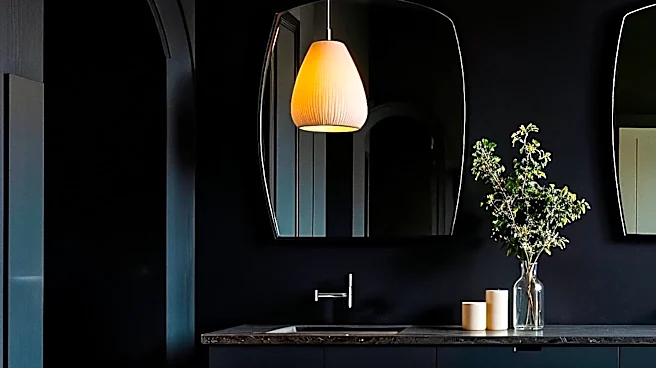
house, which was in a state of disrepair with a decaying roof and damp interiors. With limited funds, they undertook most of the renovation work themselves, including roof repairs, tiling, and building a kitchen extension. Harriet, an interior stylist, focused on creating a minimalist, modern luxe interior while preserving the home's period charm. The renovation was completed in February 2025, just before the birth of their daughter.
Why It's Important?
This renovation project highlights the potential for homeowners to undertake significant home improvements on a limited budget through DIY efforts. It demonstrates how creativity and resourcefulness can lead to the preservation of historical architecture while modernizing living spaces. The project also underscores the growing trend of sharing DIY experiences on social media platforms like TikTok and Instagram, inspiring others to take on similar projects. This approach not only saves money but also allows for personalized and unique home designs that reflect the owners' tastes and preferences.
What's Next?
Harriet plans to continue sharing her DIY renovation experiences and tips on social media, potentially inspiring more homeowners to embark on their own projects. The couple's success may encourage others to consider purchasing and renovating older properties, contributing to the preservation of historical homes. Additionally, the completed renovation has made the property available for rent as a location house, offering a new revenue stream for the couple.
Beyond the Headlines
The project raises questions about the sustainability and environmental impact of home renovations. By choosing to restore rather than demolish and rebuild, the couple has contributed to reducing waste and preserving the architectural heritage of their community. This approach aligns with broader trends in sustainable living and conservation, encouraging others to consider the environmental benefits of renovation over new construction.