

What's Happening?
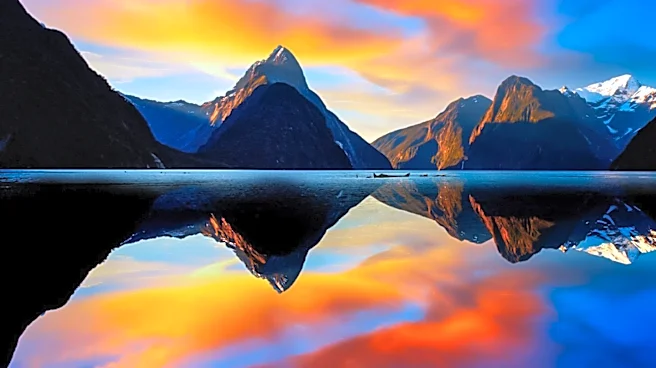
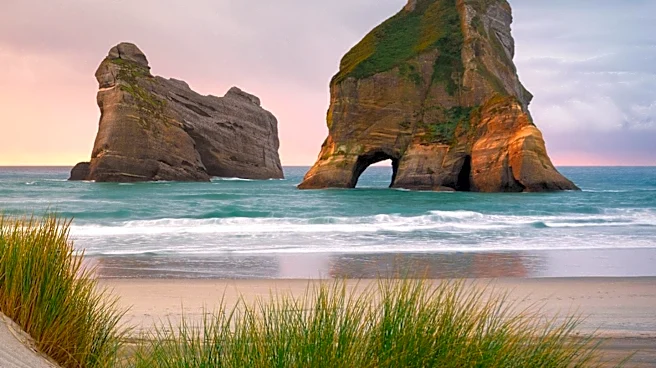
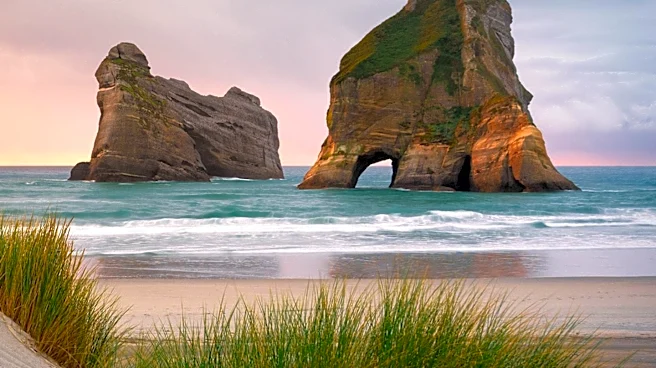
Wharariki Beach in New Zealand, known for its iconic appearance as a Windows 10 lock screen image, has recently gained renewed attention. Travel creators Sagar and Ami filmed themselves at the beach, showcasing the real-life location of the famous coastal
cave image. Their video went viral, amassing 142 million views and 8.5 million likes on Instagram. The beach, located near Puponga on New Zealand's South Island, features stunning sea stacks and a picturesque landscape that has captivated millions of computer users worldwide. The viral video has introduced Wharariki Beach to a broader audience, sparking interest in its natural beauty and accessibility.
Why It's Important?
The viral resurgence of Wharariki Beach highlights the power of social media in influencing travel trends and public interest in natural landmarks. As a location that many have unknowingly admired through their computer screens, the beach's newfound fame could boost tourism in the region, benefiting local economies. This phenomenon underscores the growing trend of digital nostalgia inspiring real-world travel, as people seek to experience firsthand the places they have seen in digital formats. The attention also emphasizes the role of visual media in shaping travel itineraries and promoting lesser-known destinations.
What's Next?
With the increased interest in Wharariki Beach, tourism authorities may need to manage visitor numbers to preserve the natural environment and ensure sustainable tourism practices. The beach's popularity could lead to infrastructure developments to accommodate tourists, such as improved access routes and visitor facilities. Additionally, the trend of digital images inspiring travel may continue to grow, prompting other destinations to leverage their digital presence to attract visitors. The impact of social media on travel decisions is likely to remain significant, influencing how destinations market themselves and engage with potential tourists.