




What's Happening?
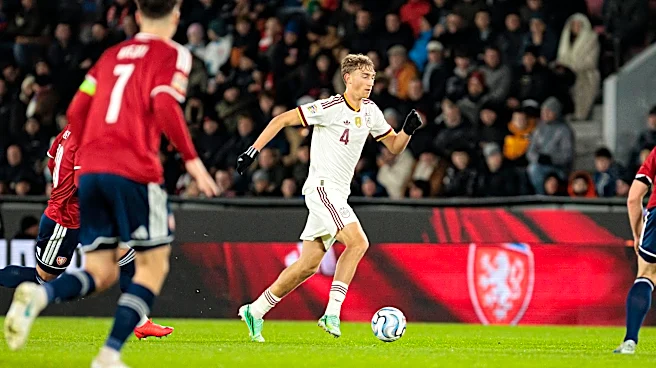
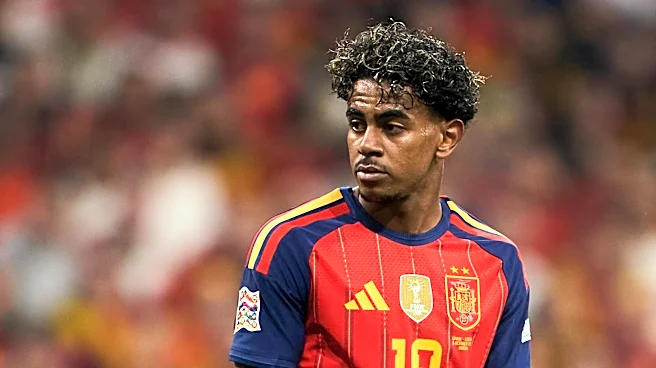
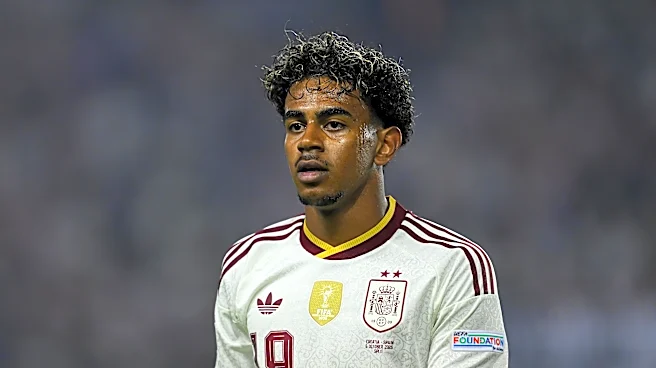
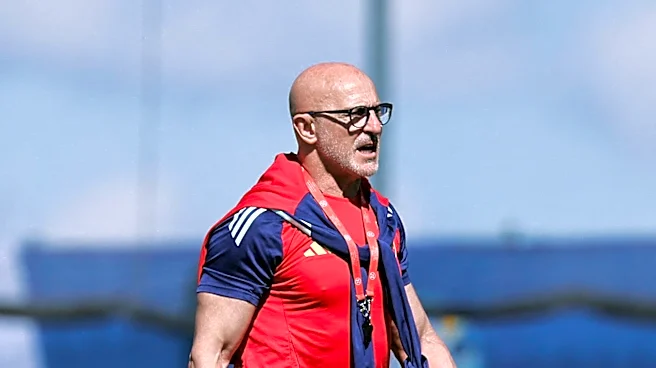
Spain's national football team coach, Luis de la Fuente, has publicly refuted allegations of preferential treatment towards player Lamine Yamal. The controversy arose after Yamal missed the squad's trip to Czechia due to fluid found on his knee following
a scan. Despite his absence, plans were made for him to rejoin the team for the subsequent match against England. This situation fueled media speculation and debate, with some outlets suggesting that Yamal, a Barcelona player, was receiving special consideration. De la Fuente expressed strong disapproval of these claims, labeling them as 'lies' and 'lack of rigour.' He clarified that the decision for Yamal to rest and receive treatment was purely medical, aimed at ensuring his fitness. The coach emphasized that similar protocols were applied to other players, such as Oyarzabal, who also rejoined the squad later. This incident highlights ongoing tensions between club and national team interests regarding player management and welfare.
Why It's Important?
This situation underscores the persistent challenges national team coaches face in managing player welfare while navigating club interests and media scrutiny. The debate over Yamal's treatment reflects broader issues in professional football, where clubs often have significant investments in their players and may seek to limit their workload, especially for young talents. For the Spanish national team, maintaining squad harmony and public trust is crucial, particularly as they prepare for high-stakes matches. The coach's forceful defense of his decisions aims to quash internal dissent and external criticism, ensuring focus remains on performance. Such controversies can impact team morale and public perception, potentially affecting player availability and strategic decisions in critical international competitions. The incident also brings to light the intense media environment surrounding top-tier football, where player health and team selections are often subject to intense public debate and speculation.
What's Next?
Lamine Yamal has since rejoined the Spanish squad in Madrid and is declared to be in 'perfect condition' and available for the upcoming match against England. The focus will now shift from the controversy surrounding his knee injury and alleged preferential treatment to the on-field performance. The match against England is a significant fixture in the Nations League group stage, and Yamal's participation will be closely watched. Coach De la Fuente will likely aim to demonstrate that his decisions were justified by the team's performance and Yamal's contribution. Further media scrutiny may follow depending on the outcome of the match and Yamal's role in it. The incident could also lead to continued discussions between national federations and clubs regarding player management protocols, especially for young, high-profile athletes, to prevent similar disputes in the future.
Beyond the Headlines
The controversy surrounding Lamine Yamal's knee scan and subsequent reintegration into the Spanish national team touches upon deeper ethical and professional considerations within elite football. It highlights the delicate balance between a player's health, club obligations, and national team duties. The intense media scrutiny and public debate reveal how quickly medical decisions can become politicized, especially when involving a young, high-profile talent. This situation also brings to the forefront the pressure on coaches to protect players from overexertion while simultaneously meeting performance expectations. The 'club versus country' debate is a perennial issue, often exacerbated by differing priorities and communication breakdowns. This incident could prompt a re-evaluation of transparency in player injury management and communication strategies between national teams, clubs, and the media to mitigate speculation and maintain trust. It also underscores the immense pressure on young athletes to perform while managing their physical well-being.