






What's Happening?
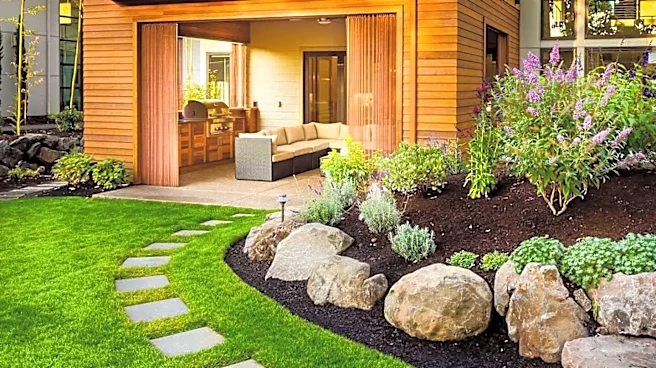
Rob Nachbar, a homeowner in Portland, Oregon, has spent approximately $50,000 over five years to transform his backyard into an outdoor entertainment space he calls 'Pong Springs.' The renovation, which began during the pandemic, includes a hot tub, a bar, artificial
turf, and various covered areas designed for recreation. Nachbar initially faced challenges with a previous landscaping attempt that left his yard with pea gravel. He then took on much of the work himself, learning skills from YouTube, to create a kitschy, brightly colored space with a 'Palm Springs' aesthetic. This transformed backyard is now rented out for $75 an hour on platforms like Swimply, generating an average of $20,000 to $21,000 in annual income. The space is popular for events such as 'Love Island' watch parties and bachelorette gatherings, with 10 to 15 reservations typically occurring each month.
Why It's Important?
This case highlights a growing trend in the U.S. where homeowners are monetizing their private properties, particularly outdoor spaces, through short-term rentals. The significant investment and subsequent return on investment demonstrate a viable business model for individuals looking to leverage their assets beyond traditional uses. It also reflects a shift in consumer behavior, with increasing demand for unique, private event spaces that offer amenities not typically found in public venues. The success of 'Pong Springs' could inspire other homeowners to explore similar ventures, potentially boosting local economies through increased spending on home improvements and services related to property management and event hosting. This trend also underscores the adaptability of the sharing economy, extending beyond traditional accommodations to specialized recreational spaces.
What's Next?
The success of 'Pong Springs' suggests a potential expansion of the 'backyard rental' market, with more homeowners possibly investing in similar transformations. Platforms like Swimply are likely to see increased usage and potentially attract more investors and users. For Nachbar, the focus will likely remain on maintaining the property and managing reservations, balancing personal use with rental income. The seasonal nature of the business, with peak activity in fall and spring, will require strategic planning for marketing and availability. Other homeowners might look to emulate this model, leading to a diversification of rental offerings and increased competition in the niche market of private event spaces. This could also prompt local municipalities to consider new regulations or permits for such commercial uses of residential properties.
Beyond the Headlines
The 'Pong Springs' phenomenon touches on broader societal shifts, including the blurring lines between personal and commercial spaces, and the increasing desire for unique, curated experiences. It reflects a creative approach to generating passive income in an evolving economic landscape, where traditional employment models are supplemented by entrepreneurial ventures. The story also subtly highlights the impact of digital platforms in enabling these micro-businesses, connecting property owners with a wider customer base. Furthermore, it speaks to the value placed on privacy and exclusivity in leisure activities, as individuals seek alternatives to crowded public venues. The transformation of a personal backyard into a revenue-generating 'funhouse' also exemplifies a DIY culture, where individuals are empowered by online resources to undertake complex projects and create value.