





What's Happening?
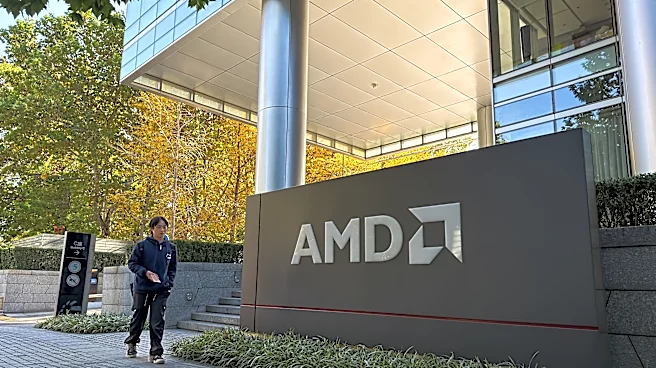
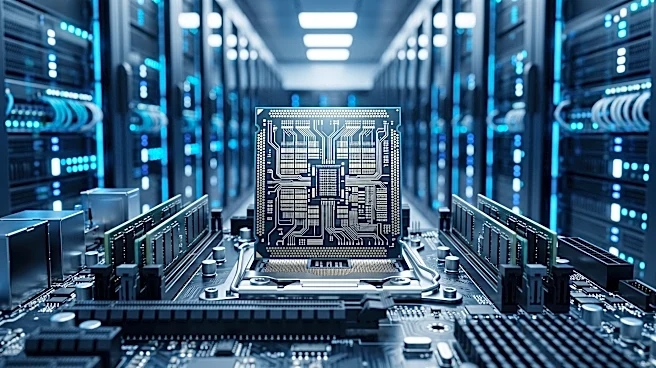
Advanced Micro Devices (AMD) has begun shipping its EPYC 9006 SP7-based platforms, introducing a new family of processors designed to meet the diverse compute demands of modern infrastructure, including agentic AI, high-performance computing (HPC), and virtualization.
The EPYC 9006 SP7 Server CPUs are the first of four planned processor families in this portfolio, with subsequent releases including AMD EPYC 9006 SP8, 9006X SP7, and 9006 LP Server CPUs. These processors are engineered to support agentic AI workflows, which involve numerous concurrent agents, tool calls, and subagent tasks, requiring dense and efficient compute power. The EPYC 9006 SP7 CPUs offer up to 256 cores and 512 threads per socket, enabling customers to run more agents and services within the same rack footprint. They also feature frequencies up to 5.3 GHz, support for JEDEC-standard MRDIMM-12800 memory, and PCIe Gen 6 I/O for x86 platforms, providing high memory bandwidth and I/O performance crucial for AI accelerators and demanding workloads.
Why It's Important?
The launch of AMD's EPYC 9006 SP7 processors is a significant development for the U.S. technology sector, particularly for enterprises and cloud providers heavily invested in AI and high-performance computing. These new CPUs address the growing need for robust infrastructure capable of handling complex agentic AI workloads, which are becoming central to advanced AI model development and deployment. By offering high core density, memory bandwidth, and I/O performance, AMD is enabling businesses to scale their AI operations more efficiently, reduce operational costs, and accelerate time to insight for critical applications. This advancement benefits not only AMD but also its partners like Dell, HPE, Lenovo, Oracle Cloud Infrastructure (OCI), and Microsoft Azure, who are integrating these processors into their server offerings and cloud services. The increased compute capabilities will drive innovation in various fields, from life sciences and quantum chemistry to weather forecasting, by facilitating faster and more complex simulations.
What's Next?
The introduction of AMD EPYC 9006 SP7-based platforms marks the beginning of a new generation of server CPUs designed for the evolving demands of AI and HPC. Following this initial release, AMD plans to roll out EPYC 9006 SP8, 9006X SP7, and 9006 LP Server CPUs, offering customers purpose-built options to further scale agentic AI and other demanding workloads. Cloud providers like Oracle Cloud Infrastructure (OCI) and Microsoft Azure are already expanding their offerings with instances powered by these new AMD EPYC processors, indicating a rapid adoption rate in the cloud computing space. This will provide enterprises with flexible deployment options for AI data preparation, agent orchestration, HPC, and general enterprise applications. The continued development and deployment of these advanced processors are expected to fuel further innovation in AI infrastructure and accelerate the integration of AI into a wider range of business and scientific applications.
Beyond the Headlines
The release of AMD's EPYC 9006 SP7 processors signifies a deeper architectural shift in how computing resources are designed and utilized for artificial intelligence. The emphasis on 'agentic AI' suggests a move beyond traditional machine learning models to more autonomous, task-oriented AI systems that require sophisticated orchestration and interaction with diverse data sources. This necessitates not just powerful GPUs but also highly capable CPUs to manage the underlying infrastructure, feed data to accelerators, and handle general-purpose computing tasks. The focus on high core counts, memory bandwidth, and PCIe Gen 6 I/O reflects a holistic approach to system design, where every component is optimized to prevent bottlenecks in AI workflows. This trend will likely lead to more integrated hardware-software solutions, pushing the boundaries of what AI can achieve and potentially transforming industries by enabling more intelligent and responsive automated systems.