






What's Happening?
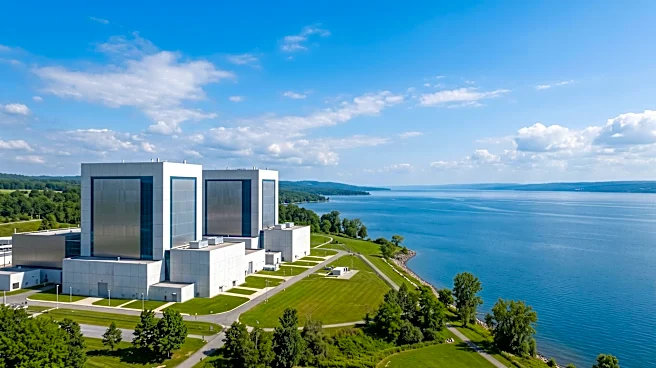
Holtec International has made significant progress on its twin nuclear reactor project in southwest Michigan, with site work commencing and key regulatory milestones achieved. The company has submitted its Preliminary Safety Analysis Report to the Nuclear
Regulatory Commission (NRC), completing the final filing phase of its two-part construction permit application. The proposed units, designated Pioneer 1 and Pioneer 2, are based on Holtec’s proprietary SMR-300 design and are planned for the Palisades Energy Campus in Covert Township. Together, these reactors are engineered to provide 680 megawatts of low-carbon electricity to the regional power grid. Recent weeks have seen intensified regulatory activity, including the NRC staff auditing and accepting an engineering report on a modular construction technique and an advanced analytical model for seismic assessment. Regulators expect to issue a formal safety evaluation report on the modular method by early November and an evaluation report on the seismic methodology later this month.
Why It's Important?
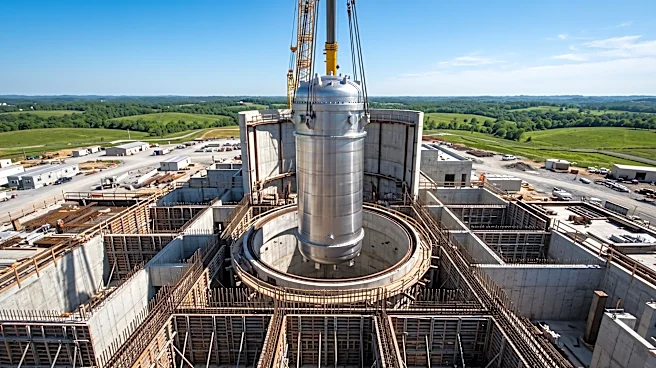
This advancement signifies a major step forward for the deployment of advanced nuclear power in the U.S. Small Modular Reactors (SMRs) like Holtec's SMR-300 are seen as a crucial component of the nation's future energy mix, offering a scalable and flexible solution for low-carbon electricity generation. The modular construction technique, which involves building components off-site, is expected to reduce field labor demands and capital expenditure, potentially making nuclear power projects more economically viable and faster to deploy. The rigorous federal reviews and audits, particularly concerning safety and seismic assessment, are critical for ensuring the reliability and public acceptance of these new nuclear technologies. Successful deployment of the Pioneer project could serve as a model for other SMR initiatives across the country, contributing to energy independence, grid stability, and climate change mitigation goals by providing a consistent, non-intermittent source of clean energy.
What's Next?
Regulators are expected to issue a formal safety evaluation report on Holtec's modular construction technique by early November, followed by an evaluation report on the advanced analytical model for seismic assessment later this month. These reports will be crucial for the project's continued progression towards commercial licensing. An audit related to early site preparation has already concluded, clearing the way for a draft evaluation in December. Holtec will continue to coordinate with the NRC to finalize technical blueprints and address any remaining regulatory requirements. The successful completion of these regulatory steps will pave the way for the full construction of the Pioneer 1 and Pioneer 2 reactors. The project's progress will be closely watched as a benchmark for the broader adoption of SMR technology in the U.S., potentially influencing future investments and policy decisions in the nuclear energy sector.
Beyond the Headlines
The development of Holtec's twin nuclear reactor project reflects a broader strategic pivot towards advanced nuclear technologies as a cornerstone of future energy policy. The emphasis on modular construction and standardized designs aims to overcome the historical challenges of cost overruns and construction delays that have plagued large-scale nuclear projects. If successful, this approach could revolutionize the nuclear industry, making it more competitive with other energy sources. Furthermore, the project's location at the Palisades Energy Campus, a site with existing nuclear infrastructure, highlights a trend of repurposing and revitalizing former nuclear sites for new advanced reactor deployments. This strategy can leverage existing transmission lines, skilled labor, and community acceptance, potentially accelerating the transition to a cleaner energy grid. The rigorous regulatory oversight also underscores the ongoing public and governmental commitment to safety, which remains paramount for nuclear energy's long-term viability and public trust.