





What's Happening?
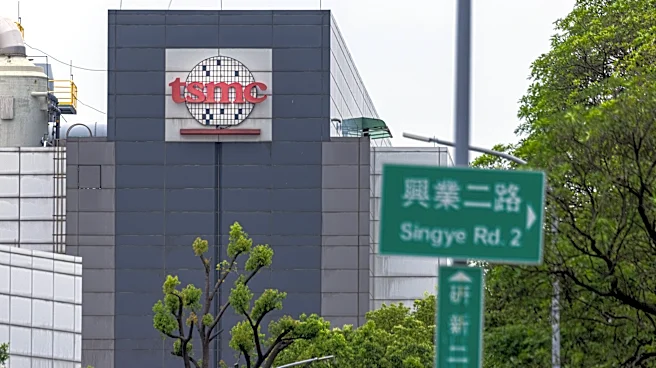
Taiwan Semiconductor Manufacturing (TSM) has experienced a 41% increase in its stock value over the past year, driven by substantial spending on AI infrastructure and the resulting demand for advanced chips. Despite this significant gain, TSM shares closed
at $398.73 on November 13, approximately 18% below their October high of $487.47. The stock saw a nearly 11% drop on November 5 amidst broader semiconductor selling, as investors considered concerns about AI investment, rising memory prices, and shifts in chip industry expansion plans. Micron Technology (MU) has benefited from tight memory supplies, but increased component costs are creating challenges for some of TSMC's customers. Despite these market fluctuations, TSMC's financial performance remains robust, with third-quarter revenue increasing 41.2% year-over-year to $46.72 billion and October sales jumping 59.7%.
Why It's Important?
TSMC's performance is a critical indicator of the health and direction of the global semiconductor industry, particularly concerning the burgeoning AI sector. As a leading contract manufacturer of advanced chips, its growth reflects the intense demand for the foundational components of AI technologies. The volatility in its stock price, however, highlights investor concerns about the sustainability of AI investment and the cyclical nature of the semiconductor market. For U.S. technology companies and consumers, TSMC's capacity and pricing directly influence the availability and cost of advanced electronics, from smartphones to AI servers. The company's substantial capital expenditures, projected to be $60 billion to $64 billion in 2026, underscore the massive investment required to keep pace with technological advancements and demand, which could impact profitability and market dynamics for years to come.
What's Next?
Analysts project that TSMC's normalized Earnings Per Share (EPS) could rise approximately 120% from 2025 to 2027, indicating strong future profitability expectations. The company's continued investment in 2-nanometer technology and advanced packaging expansion is expected to support further earnings growth over the next 12 months. However, potential risks include weaker customer spending, rising manufacturing costs, or lower capacity utilization, which could pressure profitability. Investors are keenly awaiting TSMC's fourth-quarter earnings report and its initial 2027 outlook, expected in January, which will provide crucial insights into whether demand can sustain its ambitious expansion plans. The company's ability to justify its substantial spending commitments and valuation will be a key factor in its stock performance.
Beyond the Headlines
The trajectory of TSMC's stock and its operational strategies offer a window into the broader economic and technological shifts driven by AI. The company's massive capital expenditures not only reflect its commitment to technological leadership but also signal the immense financial resources required to maintain a competitive edge in the semiconductor industry. This level of investment can have ripple effects across global supply chains, influencing raw material markets, equipment manufacturers, and skilled labor availability. Furthermore, the ongoing debate about whether TSMC's stock is undervalued or overvalued points to the inherent challenges in valuing companies at the forefront of rapidly evolving technological paradigms. The long-term implications include potential shifts in global economic power as nations vie for dominance in semiconductor manufacturing, a critical component of national security and technological sovereignty.