
What's Happening?
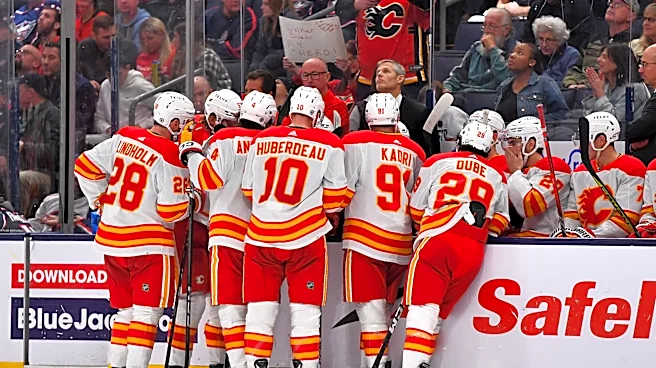
Brennan Othmann, a forward for the Calgary Flames, made headlines with his pregame comments about his former team, the New York Rangers, ahead of their Wednesday night matchup. Othmann, who was drafted
by the Rangers in 2021, expressed his belief that he never received a 'fair shake' or sufficient opportunity during his time in New York. He claimed other players were given more leeway and that he felt it was time for a change, leading to his trade to Calgary. However, his on-ice performance in the subsequent 3-1 loss to the Rangers did not match his pregame rhetoric. In his return from an upper-body injury, Othmann played 9:10, registering zero points, zero shots on goal, and only one hit, failing to make a significant impact against his former club.
Why It's Important?
Othmann's comments and subsequent performance highlight the intense pressure and scrutiny faced by professional athletes, especially when playing against former teams. His remarks created a narrative of a player seeking to prove his previous organization wrong, which often sets high expectations. His inability to deliver on the ice in this particular game could reinforce perceptions about his production and role. For the Calgary Flames, this situation underscores the importance of players focusing on their on-ice contributions rather than off-ice narratives. For the New York Rangers, Othmann's quiet performance might validate their decision to trade him. This event also touches on the broader theme of player development and the differing perspectives players and organizations have on opportunities given or missed.
What's Next?
Following his quiet performance against the New York Rangers, Brennan Othmann will likely face continued scrutiny regarding his on-ice production with the Calgary Flames. The focus will shift to his ability to consistently contribute offensively and defensively in upcoming games, rather than his past with the Rangers. For Othmann, the immediate next step is to demonstrate his value to the Flames through tangible on-ice results, such as goals, assists, and impactful play. The Flames' coaching staff will continue to evaluate his role and ice time based on his performance. This situation serves as a reminder that in professional sports, consistent performance often speaks louder than pregame statements, and Othmann will need to deliver to solidify his position and silence critics.
Beyond the Headlines
This incident delves into the psychological aspects of professional sports, where personal narratives and perceived slights can heavily influence a player's mindset. Othmann's public expression of feeling undervalued by his former team is not uncommon, but it places an immense burden on the player to perform exceptionally when given the chance to 'prove them wrong.' The outcome of this game, where his performance did not match his words, illustrates the difficulty of translating emotional motivation into on-ice success under pressure. It also raises questions about how teams manage player expectations and communication, especially with high draft picks who may feel entitled to more opportunities. This scenario serves as a cautionary tale about the double-edged sword of pregame commentary, which can either build anticipation for a triumphant return or highlight a player's struggles under the spotlight.