


What's Happening?
McLaren Team Principal Andrea Stella has expressed tempered expectations for the upcoming Las Vegas Grand Prix, citing the circuit's unique layout as a potential challenge for the team. The Las Vegas track features a massive 1.9-kilometer straight, which
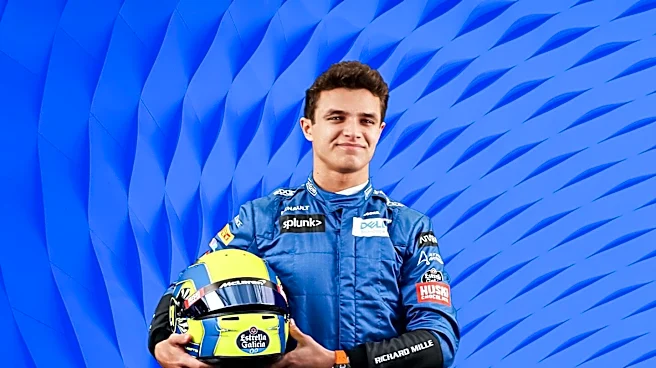
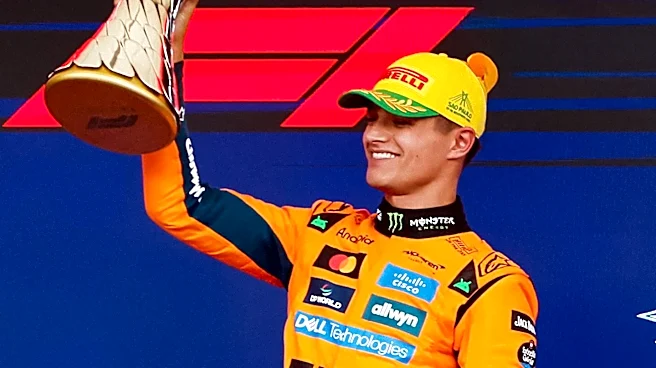
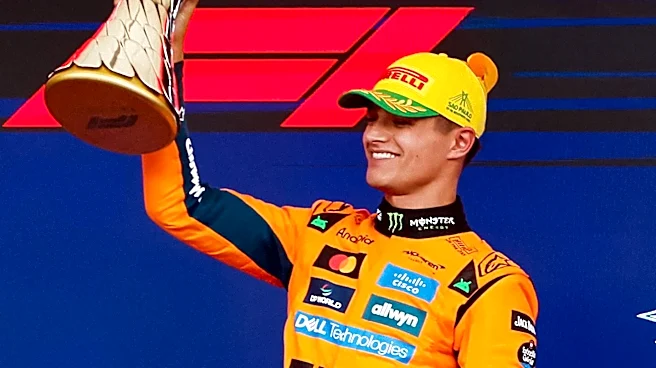
places a high premium on top speed and aerodynamic efficiency. Stella noted that McLaren's current car, the MCL40, is not ideally suited for such high-speed demands due to its fixed gear ratios, which can limit top-end performance. Despite this, McLaren plans to introduce new mechanical components at the event. These upgrades are designed not only to improve the MCL40's performance but also to serve as foundational elements for the 2027 Formula 1 car, demonstrating a long-term development strategy. Stella also highlighted the importance of driver Lando Norris's adaptability in navigating these challenges.
Why It's Important?
This situation underscores the complex interplay between vehicle design, track characteristics, and strategic development in high-performance racing, a dynamic relevant to U.S. automotive engineering and manufacturing. McLaren's decision to use the Las Vegas Grand Prix as a testing ground for future car components, despite potential immediate performance disadvantages, illustrates a commitment to long-term innovation. For U.S. industries, this highlights the value of continuous research and development, where current projects inform future designs. The challenge of optimizing a car for diverse track conditions, from high-speed straights to tight corners, mirrors the engineering complexities faced by U.S. companies developing products for varied operational environments. The reliance on driver skill, particularly adaptability, also emphasizes the human element in technological advancement.
What's Next?
McLaren's immediate focus is on executing a clean weekend at the Las Vegas Grand Prix, gathering crucial data from the new mechanical components. This data will be instrumental in shaping the design and development of the 2027 F1 car. The team aims to overcome its inherent mechanical disadvantages at the Las Vegas venue, which has historically been challenging for them. Beyond this race, the insights gained will feed into McLaren's ongoing development program, with the goal of improving overall performance and competitiveness in future seasons. The team will continue to leverage Lando Norris's driving capabilities to maximize performance under varying conditions.
Beyond the Headlines
The strategic use of a current race event for future car development, as demonstrated by McLaren, reflects a sophisticated approach to engineering and product lifecycle management. This 'test-bed' philosophy is common in advanced U.S. industries, where real-world application and data collection are critical for iterative design improvements. The constraints imposed by fixed gear ratios and specific track layouts force engineers to think creatively about aerodynamics, chassis design, and power unit integration. This continuous cycle of challenge, innovation, and adaptation not only drives competitive success in Formula 1 but also contributes to broader advancements in automotive technology, potentially influencing areas like fuel efficiency, material science, and vehicle dynamics in consumer and commercial vehicles.