






What's Happening?
Brian Moynihan, Chair and Chief Executive Officer of Bank of America, has announced the bank's participation in the newly formed Building Futures Skilled Trades Coalition. This coalition, launched by the Lowe’s Foundation, is the largest cross-sector
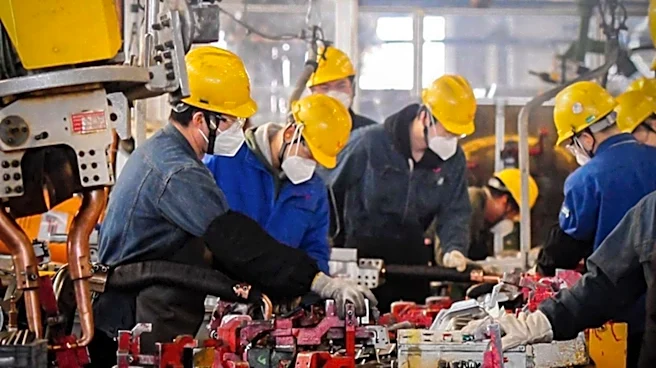
skilled trades alliance in U.S. history, aiming to train and develop one million people for skilled trades careers by 2035. The initiative addresses a significant labor shortage in the United States, with an estimated 2.1 million skilled trades jobs potentially going unfilled by 2030, which could lead to annual economic losses of up to $1 trillion. The coalition comprises over 75 American educators, businesses, workforce organizations, industry vendors, and stakeholders. Key corporate leaders involved include NVIDIA, AT&T, Carrier, General Motors, DEWALT, and Duke Energy. The coalition's strategy focuses on changing perceptions of skilled trades careers, investing in and scaling proven training solutions, and collectively measuring progress from training to employment across various industries such as construction, automotive manufacturing, telecommunications, and energy.
Why It's Important?
Bank of America's involvement, alongside other major corporations, signals a significant private sector commitment to addressing a critical national workforce challenge. The U.S. economy faces substantial risks due to the skilled labor gap, which could impede infrastructure development, technological advancement, and overall economic growth. By supporting this coalition, Bank of America and its partners are investing in the long-term health of American industries and communities. This initiative aims to create new pathways to well-paying jobs, fostering economic mobility for individuals and strengthening local economies. The effort to reframe the perception of skilled trades as viable and respected career paths is crucial for attracting a new generation of workers, ensuring that essential services and industries have the talent they need to operate and innovate. The coalition's focus on measurable outcomes will help ensure that training programs are effective and aligned with employer needs, directly impacting the supply of qualified workers in high-demand sectors.
What's Next?
The Building Futures Skilled Trades Coalition will proceed with broader implementation, with additional members, commitments, and progress updates expected to be announced. The coalition plans to develop case studies, pilot programs, and playbooks to accelerate peer learning and help more organizations adopt and scale proven training solutions. A key next step will be establishing shared metrics to track progress from training completion to employment across various industries. This data will be used to identify gaps, strengthen connections between training providers and employers, and improve pathways to in-demand jobs. The coalition will also continue its efforts to challenge outdated narratives about skilled trades, promoting these careers as respected and rewarding alternatives to traditional four-year college degrees. This ongoing effort will involve storytelling and increased awareness campaigns to elevate the craftsmanship and pride associated with these professions, aiming to attract a diverse pool of future tradespeople.
Beyond the Headlines
The formation of the Building Futures Skilled Trades Coalition highlights a broader societal shift towards recognizing the value of vocational training and skilled labor. For decades, there has been a strong emphasis on four-year college degrees as the primary path to success, often sidelining skilled trades. This coalition represents a significant re-evaluation of that paradigm, acknowledging that a robust economy requires a diverse range of skills and educational pathways. The initiative also touches upon issues of economic equity, as skilled trades often provide accessible routes to middle-class incomes without the burden of extensive student loan debt. Furthermore, the collaboration between financial institutions like Bank of America and industrial giants underscores a growing understanding that workforce development is a shared responsibility, transcending individual corporate interests. This collective approach could set a precedent for how complex national challenges, such as labor shortages and economic competitiveness, are addressed through cross-sector partnerships.