

What's Happening?
Green-Wood Cemetery in New York City recently hosted a Día de los Muertos Family Celebration, commemorating the traditional Mexican holiday that honors departed loved ones. The event, held from October 31 to November 2, featured a variety of activities
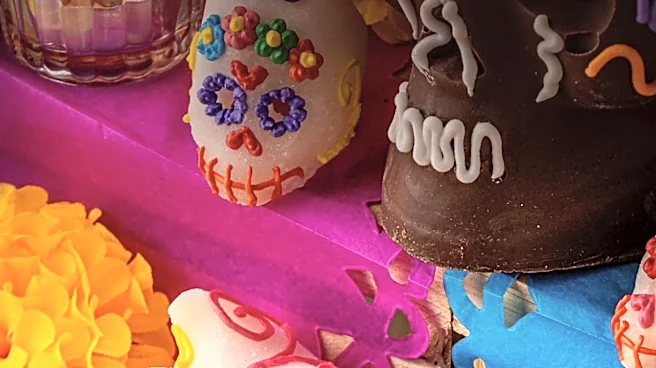
designed to engage families and celebrate Mexican culture. Attendees participated in hands-on crafts, including a scavenger hunt for papier-mâché alebrijes made by local Sunset Park High School students, Día de Muertos-themed charm making, and marigold seed planting with City Growers. The Brooklyn Public Library's Kidsmobile was also present, offering holiday-themed books and on-the-spot library card sign-ups. The celebration included musical and dance performances by groups such as Mariachi Huella Mexicana, Banda de los Muertos, Folklore Guadalupano Sangre Mexicana, Calpulli Danza Juvenil, and Tecuanes, with music from DJ Eddy Emcee. A community ofrenda (altar) was open for viewing in the Historic Chapel, culminating in a closing ceremony and dance performance by Cetiliztli Nauhcampa. Local vendors sold marigolds from Luna Family Farm and traditional Mexican food and drinks.
Why It's Important?
This Día de los Muertos celebration in a prominent New York City location like Green-Wood Cemetery is significant for several reasons. It provides a vital platform for cultural preservation and education, allowing Mexican and Mexican-American communities to share their traditions with a broader public. Such events foster cultural understanding and appreciation, breaking down barriers and promoting inclusivity within diverse urban environments. For families, it offers an opportunity to engage with cultural heritage through interactive and educational activities, reinforcing community bonds and intergenerational learning. The participation of local schools, vendors, and community organizations highlights the collaborative effort to make such cultural events accessible and impactful. Furthermore, hosting this event in a public space like a cemetery, which inherently deals with themes of remembrance and loss, adds a poignant layer to the celebration, aligning with the holiday's core purpose of honoring the deceased in a joyful and communal manner. It also demonstrates a growing recognition and embrace of diverse cultural holidays within mainstream American society.
What's Next?
Following the success of this year's Día de los Muertos celebration, it is likely that Green-Wood Cemetery and its community partners will continue to host similar events in future years, potentially expanding their scope and reach. The positive reception and community engagement suggest a sustained interest in culturally rich programming. Organizers may seek to further involve local schools and cultural groups, potentially developing more in-depth educational components or artistic collaborations. There could also be an increased focus on promoting local Mexican-American businesses and artisans through such events, providing economic opportunities within the community. Other cultural institutions in New York City and across the U.S. might look to this event as a model for hosting inclusive and engaging cultural celebrations, further integrating diverse traditions into the public sphere. Continued community feedback will likely shape the evolution of these celebrations, ensuring they remain relevant and meaningful to participants.
Beyond the Headlines
Beyond the immediate festivities, the Día de los Muertos celebration at Green-Wood Cemetery reflects broader societal trends in the U.S. towards multiculturalism and the recognition of diverse heritage. It underscores the evolving understanding of remembrance and grief, moving beyond purely somber observances to embrace celebrations of life and memory. The event also highlights the role of public spaces, such as cemeteries, in serving as cultural hubs and venues for community gathering, transforming their traditional functions. Ethically, it promotes respect for diverse spiritual and cultural practices, challenging monolithic views of death and afterlife. Legally, the increasing visibility of such celebrations can contribute to greater advocacy for cultural rights and protections for minority communities. Culturally, it signifies a shift towards a more inclusive national identity, where traditions from various ethnic groups are not just tolerated but actively celebrated and integrated into the broader cultural landscape, enriching the social fabric of American cities.