





What's Happening?
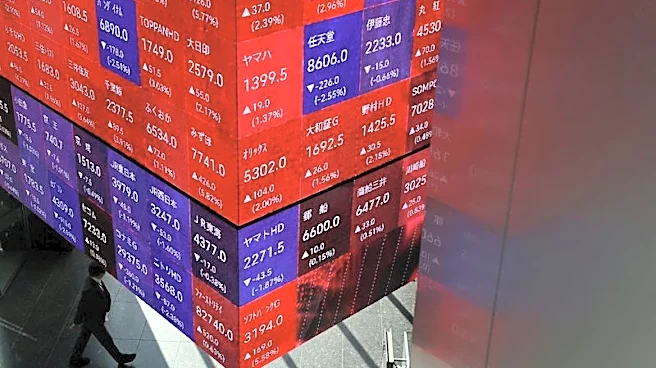
Tokyo Electron's stock price increased by 7.66 percent, reaching 8,946 yen, as the Tokyo Stock Market experienced a significant surge. This rise was part of a broader trend of heavy buying in semiconductor and artificial intelligence (AI)-related shares.
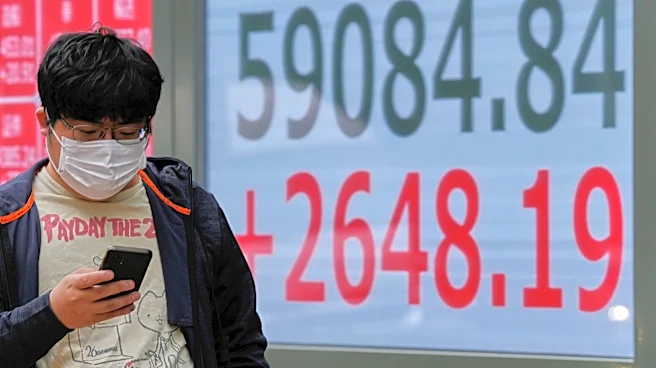
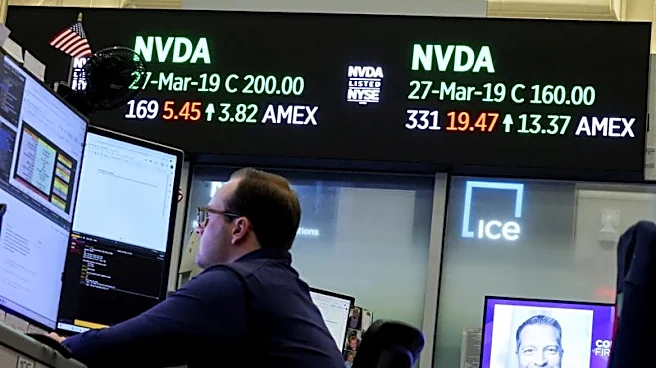
The benchmark Nikkei index briefly surged 5 percent on Tuesday, ultimately closing up 3.91 percent from Friday at 58,644.63. The broader Topix index also gained 2.47 percent, finishing at 3,764.88. This market activity followed a national holiday in Japan on Monday. The positive sentiment in Tokyo was influenced by strong overnight gains on Wall Street, where investors reacted favorably to the return of Jensen Huang as CEO of U.S. chipmaker Nvidia Corp., which alleviated concerns regarding the company's leadership and the future of the AI sector.
Why It's Important?
The surge in Tokyo Electron's stock, alongside other semiconductor and AI-related companies, highlights the global investor confidence in the technology sector, particularly in semiconductors and artificial intelligence. This trend indicates that market participants view these industries as key drivers of future economic growth. The positive reaction to leadership stability at a major U.S. chipmaker like Nvidia underscores the interconnectedness of global financial markets and the significant influence of U.S. tech developments on international bourses. For U.S. investors and companies, this signals a robust demand environment for technology components and AI solutions, potentially leading to increased revenue and investment opportunities for American firms operating in these sectors. The strong performance of Japanese tech stocks can also reflect positively on U.S. companies with partnerships or supply chain dependencies in Japan, suggesting a healthy ecosystem for technological innovation and production.
What's Next?
The continued momentum in semiconductor and AI-related stocks suggests that investors will closely monitor further developments in these sectors, including technological advancements, corporate earnings reports, and leadership announcements from key industry players. The positive sentiment driven by Nvidia's leadership stability may encourage further investment in AI and chip manufacturing companies globally. Market analysts will likely assess whether this surge represents a sustained trend or a short-term reaction to specific news. Future market movements in Tokyo and other global exchanges will also depend on broader economic indicators, geopolitical stability, and any new policy announcements related to technology and trade. Companies like Tokyo Electron will likely continue to benefit from the ongoing demand for advanced technology components, potentially leading to further growth and expansion in their operations.
Beyond the Headlines
The significant rally in semiconductor and AI stocks, exemplified by Tokyo Electron's performance, points to a deeper structural shift in the global economy towards digitalization and advanced computing. This trend has profound implications for various industries, as AI and semiconductor technologies are foundational to innovations in areas such as autonomous vehicles, advanced manufacturing, healthcare, and data analytics. The market's strong reaction to leadership changes in key tech companies underscores the critical role of human capital and strategic vision in driving technological progress and investor confidence. This sustained focus on AI and semiconductors could also intensify global competition for talent, resources, and market share, potentially leading to increased strategic alliances or rivalries between nations and corporations. Furthermore, the reliance on these technologies raises questions about supply chain resilience and national security, as countries aim to secure their access to critical components and intellectual property.