


What's Happening?
Mitsubishi Motors North America has announced its intention to re-enter the U.S. pickup truck market as part of its updated Momentum 2030 strategy. This move will involve a partnership with Nissan, though specific technical details of the new model, such
as its platform, engine, dimensions, drivetrain, or launch date, have not yet been disclosed. The company aims to expand its U.S. lineup from four to six vehicles by 2027, which currently includes the Outlander Sport, Eclipse Cross, Outlander, and Outlander Plug-in Hybrid. The expansion will also feature a new rugged Outlander variant due in early 2027 and a fully electric Eclipse Sportback arriving in autumn 2026. Mitsubishi's last pickup developed for the U.S. market was the Raider, sold from 2005 to 2009, which was closely related to the Dodge Dakota. The decision to return to the pickup segment is driven by the large and profitable nature of the North American pickup market.
Why It's Important?
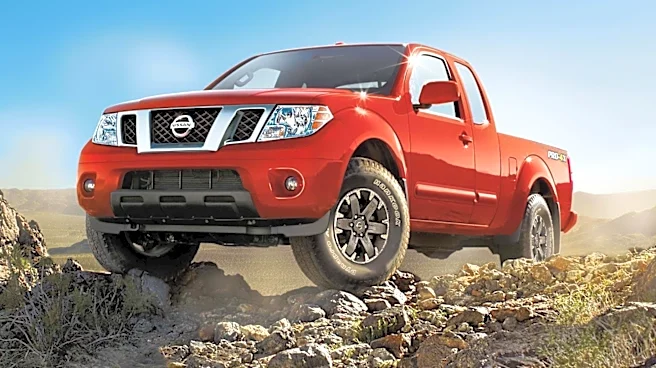
Mitsubishi's re-entry into the U.S. pickup market signifies a strategic effort to regain a foothold in a highly competitive and profitable segment. The partnership with Nissan is crucial, as it allows Mitsubishi to leverage shared platforms and components, thereby spreading development costs and reducing risk. This collaboration aligns with the long-term strategy of the Renault-Nissan-Mitsubishi Alliance, which emphasizes shared resources. For the U.S. automotive industry, this means increased competition in the midsize pickup class, currently dominated by models like the Toyota Tacoma, Ford Ranger, Chevrolet Colorado, GMC Canyon, and Nissan Frontier. Mitsubishi's focus on off-road and active-lifestyle vehicles, as indicated by the planned rugged Outlander variant, reflects a growing consumer interest in tougher, more versatile vehicles in the U.S. market. This could lead to more diverse offerings and potentially influence pricing and features across the segment.
What's Next?
Mitsubishi is expected to gradually reveal more details about its new pickup model, including its technical specifications, platform, and official launch date, as the project progresses. The company's Momentum 2030 strategy outlines a broader overhaul of its North American lineup, with the fully electric Eclipse Sportback arriving in autumn 2026 and a more off-road-focused Outlander variant in early 2027. The success of this re-entry will depend on how effectively Mitsubishi and Nissan integrate their strengths and how well the new pickup resonates with U.S. consumers in a market with established rivals. Stakeholders, including competitors and consumers, will be watching for announcements regarding the new model's features, pricing, and how it differentiates itself in the crowded midsize pickup segment. The extent of platform and component sharing with Nissan will also be a key area of interest.
Beyond the Headlines
Mitsubishi's decision to partner with Nissan for its U.S. pickup return highlights a broader trend of strategic alliances and platform sharing within the automotive industry, particularly for segments requiring substantial investment in development. This approach allows companies to mitigate financial risks and accelerate market entry. The emphasis on off-road and active-lifestyle vehicles also points to a cultural shift in consumer preferences, where utility and ruggedness are increasingly valued. This could influence future vehicle design and marketing strategies across the industry, moving towards more versatile and adventure-oriented models. Furthermore, the return of a brand like Mitsubishi to a segment it exited years ago underscores the dynamic nature of the U.S. automotive market and the continuous pursuit of profitable niches, even through collaborative efforts with former competitors.