





What's Happening?
Chopova Lowena, a fashion brand known for its distinctive blend of traditional Bulgarian fabrics and 1970s rock-climbing gear, is at the forefront of a trend that is reinventing pearl jewelry. The brand, co-founded by Emma Chopova and Laura Lowena-Irons,
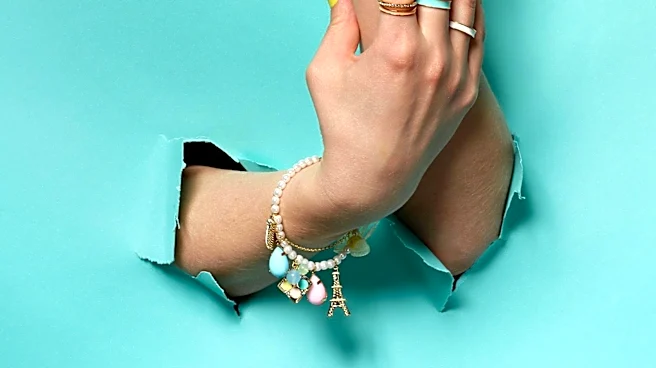
has incorporated pearls into its designs in a playful and offbeat manner, moving away from their traditional association with classic elegance and wealth. This approach was highlighted in their collections, where pearls were styled with a mix of fabrics, colors, and folkloric influences. The brand's signature pleated skirts, often attached to leather belts with metal carabiners, provide a unique backdrop for these recontextualized pearls. This reinterpretation is part of a broader movement in fashion where designers are shedding the pearl's 'prudish reputation' and showcasing its versatility, making it adaptable to various styles from classic to bold and unexpected.
Why It's Important?
This shift in how pearls are presented by brands like Chopova Lowena is significant for the fashion industry and consumer perceptions of luxury. Historically, pearls have been symbols of wealth and status, worn by royalty and the elite. By integrating them into more unconventional and modern designs, Chopova Lowena is democratizing the pearl, making it accessible and appealing to a wider, younger demographic. This re-contextualization challenges established norms in jewelry and fashion, encouraging innovation and creativity. It also highlights a growing consumer demand for unique, handcrafted, and recycled materials, as Chopova Lowena emphasizes these aspects in their production. The brand's success in making pearls 'playful and delightfully offbeat' demonstrates that traditional luxury items can evolve to remain relevant in contemporary fashion, influencing other designers and jewelry brands to explore similar creative avenues.
What's Next?
The trend initiated by Chopova Lowena and other designers suggests a continued evolution in how traditional elements are incorporated into modern fashion. Consumers can expect to see more experimental and unconventional uses of classic materials like pearls in upcoming collections. This could lead to a broader acceptance of 'offbeat' luxury and a blurring of lines between high fashion and street style. Other brands may follow suit, exploring new ways to integrate historical elements with contemporary aesthetics, potentially leading to collaborations between traditional jewelers and avant-garde designers. The emphasis on recycled materials and handcrafting, central to Chopova Lowena's ethos, is also likely to gain further traction, influencing sustainable practices across the industry. This movement could also inspire consumers to repurpose or restyle existing pearl jewelry, giving new life to inherited pieces.
Beyond the Headlines
Beyond the immediate fashion trends, Chopova Lowena's approach to pearl jewelry touches upon deeper cultural and ethical implications. By challenging the traditional image of pearls, the brand is subtly questioning established notions of luxury, status, and femininity. The historical association of pearls with 'virgin queens' and 'old money elegance' is being dismantled, making way for a more inclusive and diverse interpretation of beauty and style. This re-evaluation encourages a dialogue about the origins and symbolism of materials in fashion, prompting consumers to consider the narrative behind their purchases. Furthermore, the brand's commitment to recycled materials and handcrafting aligns with a growing global consciousness around sustainability and ethical production, suggesting a long-term shift in consumer values towards more responsible and meaningful consumption in the luxury market.