








What's Happening?
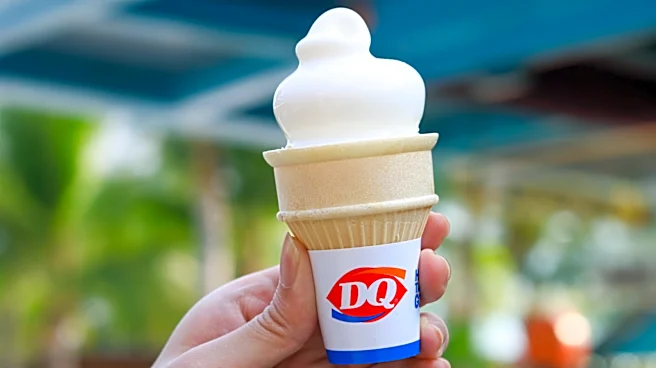
Dairy Queen's popular frozen dessert, commonly referred to as ice cream, does not meet the U.S. Department of Agriculture's (USDA) definition of ice cream. According to USDA standards, ice cream must contain at least 10% milkfat. Dairy Queen's soft serve
contains between 3% and 6% milkfat, classifying it as a frozen dairy dessert rather than true ice cream. This lower milkfat content contributes to its lighter texture. Additionally, Dairy Queen's soft serve has a higher overrun, meaning more air is incorporated during freezing, resulting in a softer and fluffier texture compared to traditional ice cream. This distinction is not unique to Dairy Queen, as other fast-food chains like McDonald's also offer soft serve that does not meet the USDA's ice cream criteria.
Why It's Important?
The distinction between soft serve and traditional ice cream is significant for consumers who may be unaware of the differences in composition and texture. Understanding these differences can influence consumer choices and expectations when purchasing frozen desserts. The USDA's standards ensure transparency and consistency in food labeling, which is crucial for consumer trust. This information also highlights the broader industry practices regarding product labeling and marketing, which can impact consumer perceptions and brand reputation.