


What's Happening?
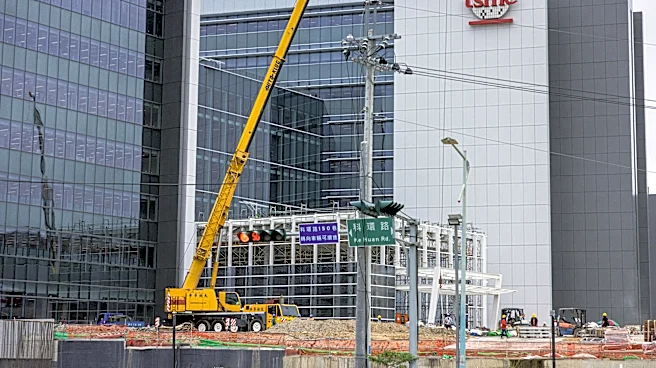
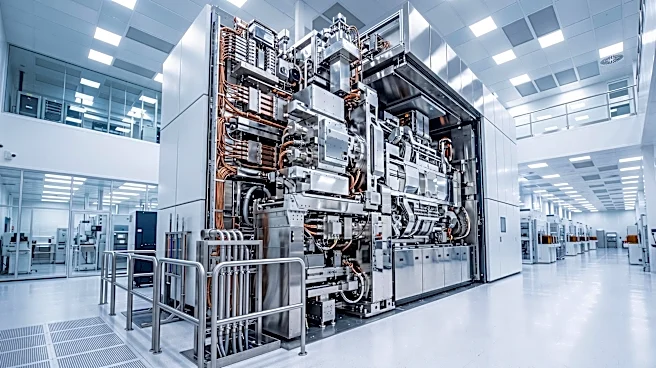
Taiwan Semiconductor Manufacturing Company (TSMC), a global leader in semiconductor manufacturing, is significantly expanding its fabrication facilities beyond Taiwan, with new investments in the United States and Japan. This strategic expansion aims
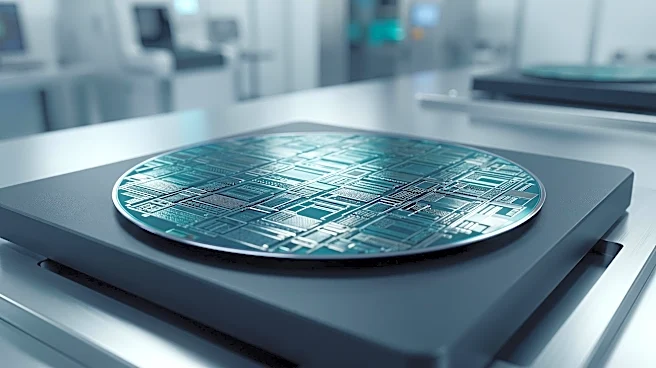
to increase capacity, improve yield, and develop next-generation nodes, including 2nm and beyond. These advanced nodes are crucial for emerging technologies such as artificial intelligence and quantum computing. TSMC's commitment to manufacturing excellence and its 'pure-play foundry' model, which separates chip design from physical production, has been instrumental in its dominance. This model has fostered innovation in chip design globally, particularly in the United States. The company's unwavering focus on process technology advancement, moving from single-digit micrometer nodes to today’s sub-3-nanometer regimes, has set a rapid pace for the industry.
Why It's Important?
TSMC's investment in new fabrication facilities in the U.S. and Japan is a critical development for global semiconductor supply chain resilience and U.S. technological independence. The COVID-19 pandemic and geopolitical tensions have highlighted the vulnerabilities of concentrated supply chains, particularly the reliance on a single region for advanced chip manufacturing. By expanding its footprint, TSMC helps diversify manufacturing locations, reducing risks associated with regional disruptions. For the U.S., this means a more secure domestic supply of cutting-edge semiconductors, vital for its technology sector, national security, and economic competitiveness. It also supports the U.S. government's initiatives to bring semiconductor manufacturing back to American soil, creating jobs and fostering a domestic ecosystem for advanced technology. This move is crucial for maintaining U.S. leadership in areas like AI and quantum computing, which depend heavily on the most advanced chip technologies.
What's Next?
The establishment of new TSMC fabs in the U.S. and Japan will likely lead to a more geographically diversified semiconductor manufacturing landscape. This diversification is expected to enhance supply chain resilience and reduce the impact of potential disruptions. The U.S. government and industry stakeholders will likely continue to support such investments through incentives and partnerships to further strengthen domestic semiconductor capabilities. However, challenges remain, including scaling complex processes while maintaining industry-leading quality and addressing workforce development needs in these new locations. TSMC and its partners will need to continue investing in talent development and education to ensure a skilled workforce capable of operating these advanced facilities. The long-term trend will likely involve a continued push for 'China-plus-one' strategies, where critical manufacturing steps are duplicated in multiple locations to enhance overall supply chain robustness.
Beyond the Headlines
The expansion of TSMC's manufacturing capabilities beyond Taiwan carries profound implications for geopolitical stability and technological competition. The concept of a 'silicon shield,' where Taiwan's critical role in the global chip supply chain acts as a deterrent against disruption, may evolve as manufacturing becomes more distributed. While Taiwan will likely remain a central hub for the most advanced processes, the decentralization of manufacturing could alter the strategic calculus for nations. This shift could also foster greater international collaboration in semiconductor research and development, as countries seek to secure their access to cutting-edge technology. Furthermore, the increased investment in advanced nodes for AI and quantum computing underscores a global technological arms race, where access to and control over these foundational technologies will be paramount for future economic and military power.