





What's Happening?
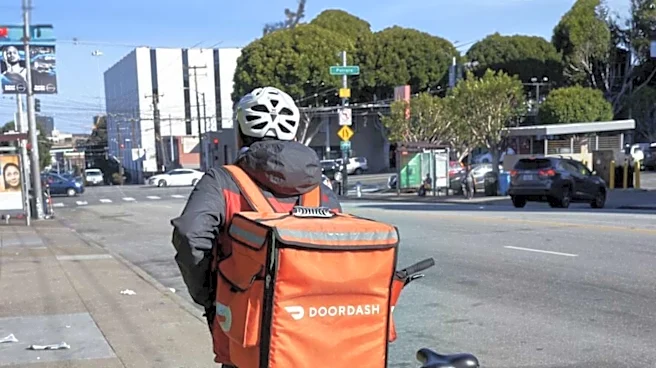
DoorDash has reached an agreement to acquire its U.S. grocery delivery competitor, Instacart, in a transaction valued at approximately $17 billion. This strategic move aims to enhance DoorDash's competitive standing against major retailers like Walmart
and Amazon in the rapidly expanding online grocery sector. The deal, as reported by Big News Network and MarketingReport, will combine DoorDash's extensive delivery network with Instacart's specialized grocery technology and fulfillment capabilities. Instacart shareholders will have the option to receive cash, DoorDash shares, or a combination, with DoorDash shares accounting for no more than 25% of the total transaction value. The acquisition is expected to expand consumer choices, improve delivery options, and create more earning opportunities for delivery workers across both platforms. The grocery delivery software market is experiencing dynamic growth, driven by cloud-based solutions and third-party integrations, with a projected compound annual growth rate of 8.1%.
Why It's Important?
This acquisition is significant as it consolidates two major players in the U.S. on-demand delivery market, intensifying competition with established retail giants. For DoorDash, it represents a substantial expansion into the grocery sector, a segment where profitability has historically been challenging. The combined entity will offer grocers and retailers a more comprehensive suite of services, including delivery, online ordering infrastructure, advertising solutions, and AI tools, helping them compete with larger online retailers. Consumers stand to benefit from increased store access and potentially unified subscription benefits, with DoorDash estimating annual savings of approximately $100 million for members who currently hold both DashPass and Instacart+ subscriptions. The deal also aims to provide more flexible earning opportunities for delivery workers, allowing them to choose between grocery and restaurant deliveries.
What's Next?
The acquisition is anticipated to close towards the end of 2027 or in the first half of 2028, pending approval from Instacart shareholders, regulatory clearances, and other customary closing conditions. This includes antitrust review under the Hart-Scott-Rodino Act in the United States, as well as regulatory approvals in Canada and Israel. DoorDash plans to finance the cash component of the deal through existing cash reserves and debt financing, having secured a commitment for a 364-day senior unsecured bridge loan facility. Following the completion of the acquisition, DoorDash intends to retain the Instacart brand, its enterprise technology products, and its consumer app, with both companies continuing to operate independently until the transaction officially closes. The integration process will likely focus on leveraging the strengths of both platforms to create a more efficient and competitive grocery delivery service.
Beyond the Headlines
The DoorDash-Instacart merger could trigger broader shifts in the U.S. digital grocery landscape, pushing other delivery services and traditional grocers to innovate further in speed, efficiency, and customer experience. The emphasis on making ultra-fast delivery accessible and intuitive from the start of the shopping journey, as highlighted by Albertsons' Flash 2.0 redesign, indicates a growing industry imperative beyond just logistics. This deal also underscores the increasing importance of technology and AI in optimizing grocery delivery, from inventory management to personalized shopping experiences. The commitment by DoorDash to keep its platform open to local grocery retailers, allowing them to work with competing delivery services, suggests an effort to mitigate potential antitrust concerns and maintain retailer trust, which GlobalData identifies as crucial for profitability in this sector.